何世文He Shiwen
2025-12-23 22:31:33 Art weekly

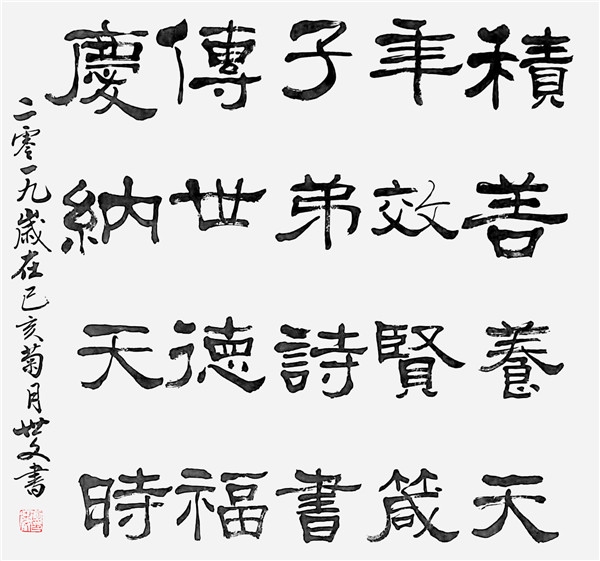
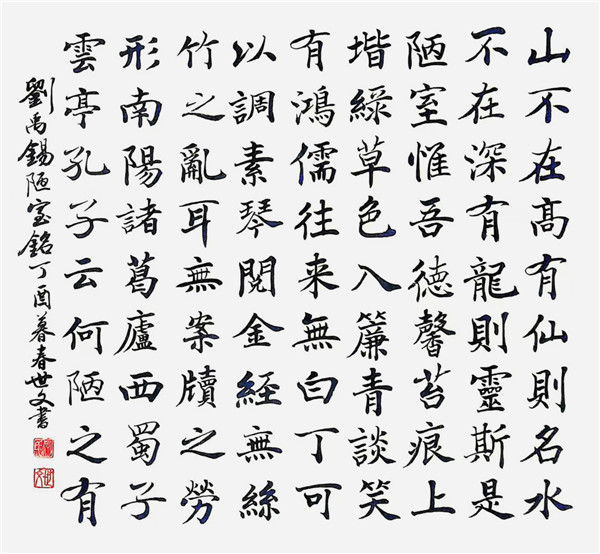
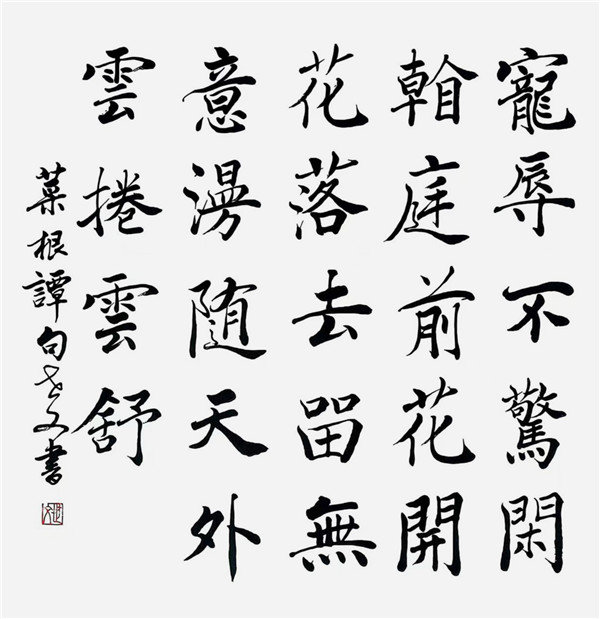
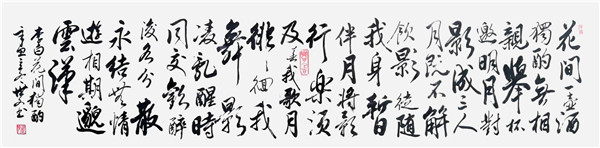
He Shiwen, male, born in November 1948, is from Guangchang County, Jiangxi Province. He is currently a member of the Jiangxi Calligraphers Association. I have loved calligraphy since I was young, and at first, I mainly learned regular script. I have studied Liu Gongquan's "Mysterious Pagoda Stele", Ouyang Xun's "Inscription on Liquan in Jiucheng Palace", Zhiyong Zhenshu's "Thousand Character Inscription", and Zhao Mengfu's "Danba Stele" and Chu Suiliang's "Large Character Yin Fu Jing" to prepare the inscription. I have mainly studied Wang Xizhi's "Preface to Lanting", Huairen's "Preface to Collecting the Holy Teachings of the King", Mi Fu's "Shu Su Tie", "Tai Xi Shi" and some bamboo slips in cursive script. I have studied the "Zhangqian Stele", "Xianyu Huang", and "He Shaoji's Visit to Zhangqian Stele" in Li script. After retirement, he successively participated in the Calligraphy Training Center of the China Book Association and studied running script at the Correspondence University of Chinese Painting and Calligraphy. Received careful guidance from teachers such as Ye Pengfei, director of the Liu Haisu Art Museum in Changzhou, member of the Chinese Calligraphy Association, Zheng Mingfu from the Correspondence University of Chinese Calligraphy, Xu Heyong, editor of the Journal of Calligraphy, and Li Liangdong, member of the Chinese Calligraphy Association. Calligraphy works are exhibited or awarded at calligraphy exhibitions in provinces, cities, counties, and national land systems. It has been published in newspapers and magazines such as "Calligraphy Guide", "Calligraphy News, Calligraphy and Painting World", "Essence of Calligraphy and Painting, Elderly People", and "Old Friends" in Jiangxi Province.
Literature carries the message, books shine with brilliance
——Impressions of He Shiwen's Calligraphy
Huang Jinliang (Editor in Chief of Chinese Painting and Calligraphy Guide)
He Shiwen's calligraphy is a contemporary practitioner of both form and spirit. His works reflect his temperament in traditional methods and express his literary spirit through the brushstrokes.
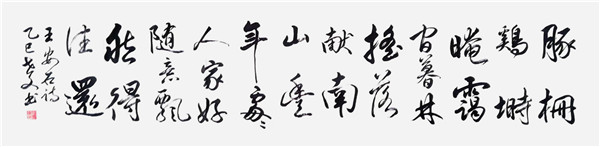
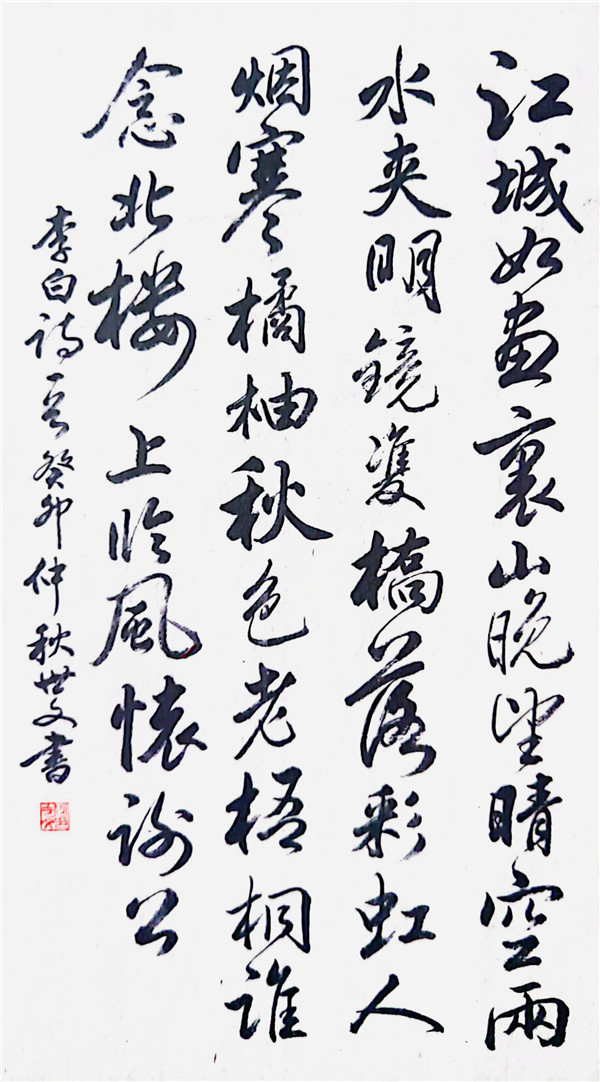
From the perspective of calligraphy style, he combines the "Jin and Tang styles": the regular script has a stable structure and captures Ouyang Xun's "dangerous strength", but breaks through the stagnation with the strokes of running script, as stated in Xiang Mu's "Calligraphy Elegant Words": "The style is taken from the Jin and Tang dynasties, and the meaning is reflected in the flowing beauty"; The cursive style takes inspiration from the "two kings" of power, with continuous strokes and rhythmic movements. The lines are as rough and vigorous as the "leaking marks" of a house, while also capturing the refreshing beauty of Mi Fu's "brush strokes", combining "bone strength" and "rhyme".
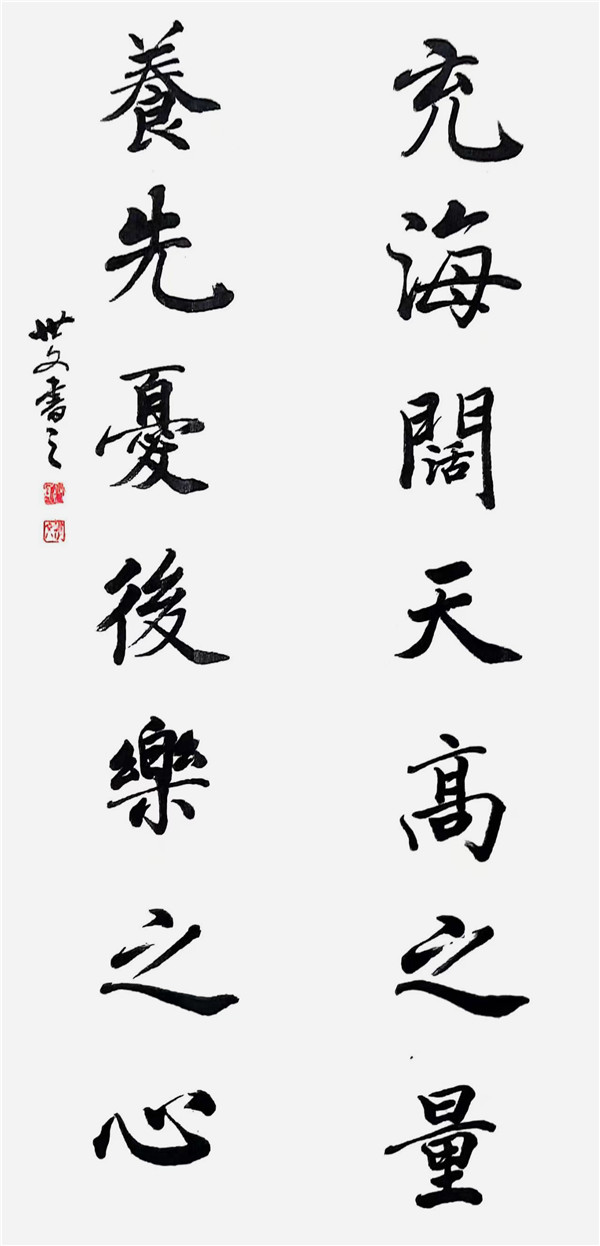
The most touching aspect of his works is the literati temperament of "painting with books as the heart": when writing the couplet "Fill the vast sea and the lofty sky, nourish the heart of worries and happiness" in "Caigen Tan", the characters are broad and open, and the ink colors are thick and light, transforming the broad mindedness of the sentences into the stretching of brush and ink; The cursive style of the poem 'Early Plum Blossoms' interweaves flying white and heavy ink, depicting both the coldness of plum blossoms and the sharp strokes of' cone painting sand ', which is in line with Sun Guoting's literary core of' expressing his temperament and shaping his sorrow and joy '.
He is particularly good at using books to convey literature, reflecting the artistic conception of classical texts and the form of calligraphy: the sparsity of Su Shi's poetry, the elegance of Li Bai's poetry, and the solemnity of Xin Qiji's poetry are all echoed in the opening and closing of his brush and ink, achieving the goal of "conveying the message through literature and shining with brilliance through calligraphy".
In the trend of pursuing visual impact in the contemporary calligraphy world, He Shiwen has upheld the bottom line of "pen and ink should follow the times, and the roots should not be separated from tradition". His works are a new face of literati calligraphy that "has laws to follow and emotions to feel", just as Fu Shan said, "When writing characters, people first create characters, and people have unique characters since ancient times" - using pen and ink as a medium, he not only conveys the aesthetic genes of Chinese characters, but also writes the spiritual atmosphere of contemporary scholars.




Copyright Notice: Original content on this website is welcome to be reposted. Please indicate the source when reposting, Global Art Network www.caanets.com; Some of the content posted on this website comes from the internet. If there is any infringement, please contact this website to delete it.
Daily recommendations
- [Exhibition]Sketching Public Education ...
- [News]Russian Avant garde Art Exhibition
- [News]Stone Tiger's Last Ten Yea...
Weekly hot topics
- 1Tianyu Ballad showcases the ...
- 2Wu Shanming Chinese Brush In...
- 3Three calligraphers go to Pi...
- 4Kunyun Danqing · Yongkun Op...
- 5The Art Exhibition of 'Circu...