The Game of Algorithms and Inspiration: Where Art is Going in the AI Era
2025-10-25 21:00:44 Yao Feng
With the development and application of artificial intelligence (AI) technology, AI has become not only a research object in the scientific field, but also a creative medium and participant in the artistic field. The mutual construction and symbiosis of art and technology ultimately point to humanity's eternal exploration of "possibility" - technology provides the means to realize this possibility, while art gives meaning to the possibility. The two will jointly illuminate the unknown realm of human civilization evolution and artistic innovation.
In this collision of technology and art, what we see is not only the advancement of algorithms, but also a profound questioning of the essence of human aesthetics.
AI is reshaping the art creation ecosystem
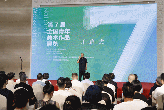
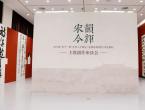
Currently, artificial intelligence art creation has become the most transformative field. From the "Enhancing Vision and Creating Environment: International Artificial Intelligence Art Literature Exhibition" at Shanghai Minsheng Modern Art Museum to the 2025 World Artificial Intelligence Conference Ecological Forum, AI art is moving from the periphery to the center. The speed of technological iteration is astonishing: the professional level aesthetic evaluation model "Scholar · Miaoxi" has pioneered the "Seven Techniques Dimension" aesthetic evaluation system, which can provide professional level ratings for dimensions such as composition, color, technique, and emotion. Algorithms can not only create, but also evaluate, which completely subverts the traditional art evaluation system.
The use of new technological algorithms and tools to increase the possibility of artistic creation is a practice that artists have always pursued. However, art has always been regarded as a product of human emotions and creativity, with aesthetic sensibility that is beyond the reach of artificial intelligence. With the development of technology, artificial intelligence has gradually acquired the ability to move from imitation to creation, from "reproduction" to "generation". Artists use artificial intelligence algorithms to create new art forms and evoke new aesthetic experiences during the creative process, giving rise to "artificial intelligence art". It not only has unique aesthetic value, but also demonstrates the innovation of technological rationality, reflecting the combination of artificial intelligence and human creativity. The emergence of AI art blurs the boundaries between traditional tools and creators, and reconstructs the possibilities of artistic production. Traditional artificial intelligence mainly focuses on analytical capabilities, such as discovering patterns and patterns through data analysis, and applying them to scenarios such as personalized recommendations. The rise of AI art is attributed to the low physical constraints, high fault tolerance, and maturity of data and algorithms in the field of art. But the rapid development of technology has also brought about deep anxiety: what is the uniqueness of human creators when AI can imitate any master style?
The non programmable nature of human art
In the wave of algorithms, truly vibrant creations often emerge from non-linear intuition, emotional tension, and cultural cracks. These are precisely the non programmable areas that AI is still unable to reach.
Shu Yong, a member of the National Committee of the Chinese People's Political Consultative Conference and Vice President of the Democratic Progressive Party Central Academy of Fine Arts, pointed out sharply that the depth of the artistic conception of "being able to travel and live" in traditional Chinese painting is often lost when AI generates works. The "Three Distant Techniques" emphasized by Song Dynasty painter Guo Xi in his work "Lin Quan Gao Zhi" are not only compositional techniques, but also a way of thinking for Chinese people to observe the world. Art has a transcendent phenomenon. Art can evoke rich aesthetic emotions, which is a form of transcendence. Painting is like this, artists communicate with audiences through their works, which contain their rich artistic thoughts and experiences, greatly surpassing ordinary arrangements and combinations such as paper, canvas, and brushes.
Lu Tao, director of the Collaborative Innovation Center for Cultural and Creative Design and Manufacturing Industry at China Academy of Art, believes that art works are precisely those things that cannot be summarized by data. They need to tolerate ambiguity, adhere to non-standard standards, and accommodate uncertainty. This' non programmability 'is precisely where the value of human art lies.
The transition from creator to "bartender"
German photography artist Boris Aedagsen proposed the "three-stage creator role" model through practice: from the "original creator" of traditional photography to the "conductor" when using the first generation of AI, and then to the "bartender" of the multimodal era. This evolution highlights the key to human-machine collaboration - humans must have control over the initiation and final evaluation of creativity, relying on professional experience and artistic taste to ensure the quality of works. AI is essentially an unintentional tool that requires human guidance to be effective, "emphasized Ada Carson. ”Wang Luping, Director of Alibaba Cloud Design Center, reminds us not to forget the power of aesthetics. Even if AI helps you generate ten or a hundred works, you still need to use aesthetics to choose. This ability to make choices precisely reflects the irreplaceability of human aesthetic sensibility.
Cracking the Eastern Wisdom of Algorithm Hegemony
To maintain the warmth of art in the wave of algorithms, it requires aesthetic wisdom deeply rooted in cultural soil. Shu Yong believes that this aesthetic wisdom is the key to breaking algorithmic hegemony. When picking up the brush to create a landscape of two zhang, Xuan paper carries not only ink and wash, but also the awakening of millennium cultural genes. The ups and downs of the wrist movements are in line with the philosophical rhythm of 'one yin and one yang is the way'. The natural infiltration of ink and wash in life and culture interprets the aesthetic code of "unity of heaven and man". Shu Yong has explored the creative philosophy of "human-machine integration" in artistic practice: when AI generated cyber lotus collides with traditional freehand lotus, it not only highlights the tension between technological rationality and humanistic sensibility, but also gives birth to a new language of "ink charm flowing light".
The Identity Crisis of AI Art
The installation artwork "The Momentum of Tying a Dog" by Japanese cross media artist Takayuki Fujita metaphorically depicts the current state of AI art through a robotic dog locked in a chain and struggling to break free from its restraints. This work makes people realize that although robots are not living beings and do not truly feel pain or anger, everything is controlled by humans, their movements and reactions still affect the viewer's nerves. This raises a profound question: when AI is able to create emotionally rich works of art, can it truly understand emotions?
The creative practice of young artist Jian Dan provides us with a case study of finding a balance between technical rationality and aesthetic sensibility. Her creations blend the precision algorithms of AI image generation with the rough texture of oil painting knife carving, allowing the rational light of technology and the emotional temperature of art to dance on the canvas. Artists and artificial intelligence together constitute the creative subject, and there is a symbiotic relationship between algorithms and inspiration. Artists are usually responsible for providing creative inspiration, themes, and aesthetic guidance, while artificial intelligence learns a large amount of art data to form different models and algorithms, assisting artists in generating art works with unique styles and expressive power.
Finding a Balance Point in Symbiosis
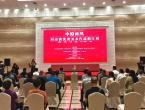
Professor Yao Dajun from China Academy of Art announced the establishment of the "International AI Creative Alliance" at the World Artificial Intelligence Conference Ecological Forum. The alliance aims to promote cross-cultural dialogue between AI and art, establish shared datasets and ethical frameworks. The alliance hopes to take the forum and alliance as a new starting point, continue to explore the collaborative evolution of "two AI" - artificial intelligence and artistic intelligence, and contribute creative solutions in the Eastern context to global digital civilization. Han Xu, Vice President of China Academy of Art, pointed out that when AI can generate works at an astonishing speed, humans must re anchor "artistic intelligence" - the kind of "originality" that integrates intuition, experience, emotion, and cultural background. Technology will force us to rethink: what is originality? What is inspiration? What is the beauty of depth?
On September 20th, young artist Jian Dan held a sharing session in Hong Kong with the theme of "Stop Throwing Electronic Pacifiers", exploring from an artistic perspective how families can balance the use of technology and create high-quality interactive time. This continues her consistent artistic healing philosophy - believing that art has the magic to mend social rifts.
In reality, the seed of artificial intelligence art creation is the combination of technology and art, imagination and creativity, as well as the game between algorithms and inspiration. This also reflects the eternal questioning of the essence of art under the influence of technology. Nowadays, the "information cocoon" shaped by algorithmic recommendation systems is eroding the diversity of aesthetics, and deepfake technology blurs the boundary between reality and fiction, leading to the dilution of humanistic spirit. But at the same time, art plays a role in injecting ethical warmth into technological development from beginning to end. The constantly developing artificial intelligence technology is emerging as a force that is about to trigger a revolution in the field of art, challenging the traditional paradigm of art production. When we face AI, we should not ask what it can create for us, but rather use it as a reference to examine our own sensitivity to problems, perspective on things, and depth of reflection on phenomena. The game between algorithm and inspiration ultimately points to the self transcendence of human creativity.
(The author is a doctoral student from Taizhou University and Tongji University)
Copyright Notice: Original content on this website is welcome to be reposted. Please indicate the source when reposting, Global Art Network www.caanets.com; Some of the content posted on this website comes from the internet. If there is any infringement, please contact this website to delete it.