冯宏武Feng Hongwu
2025-12-23 10:34:58

Feng Hongwu, male, born in February 1940, is a member of the Communist Party of China. The calligraphy works have been exhibited and awarded multiple times in various provinces, cities, and districts across the country, and have been published in Chinese Calligraphy Newspaper, Calligraphy Guide Newspaper, and Xizhi Calligraphy Newspaper. The works of Li Ti Ban Shu are collected by the Meimu Museum in Qingweilou, Xianyang, Shaanxi. He has been awarded honors such as "Outstanding Contemporary Chinese Calligrapher" and "Double Happiness Artist of Chinese Calligraphers and Painters". In recent years, he has actively supported and participated in cultural and national public welfare activities, was elected as a commentator for public welfare activities, and was honored with the title of Excellent Volunteer.
I am currently a member of the Chinese Calligraphers and Photographers Association, the Chinese Elderly Calligraphers and Painters Association, the Shaanxi Calligraphers Association, the Shaanxi Cultural Industry Promotion Association, the Shaanxi Tianyuan Calligraphers and Painters Society, the Xianyang Calligraphers Association, the Xianyang Elderly Cadres Calligraphy and Painting Art Institute, the Beijing Huaxia National Art Calligraphy and Painting Academy, a specially invited volunteer member for cultural power public welfare activities, and an outstanding volunteer and commentator for public welfare activities at the Shaanxi Liyuan Calligraphy and Painting Academy.
Pu Zhuo sees the ancient meaning and exudes the spirit of wind with determination
——Feng Hongwu's Impressions of Li Script
Huang Jinliang (Editor in Chief of Chinese Painting and Calligraphy Guide)
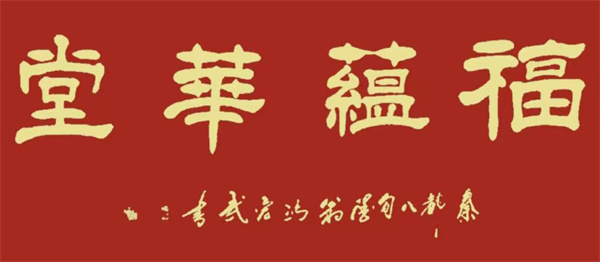
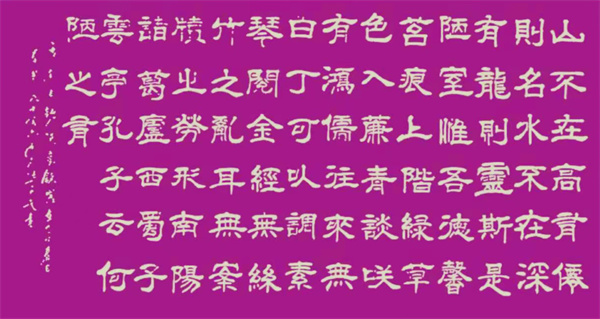
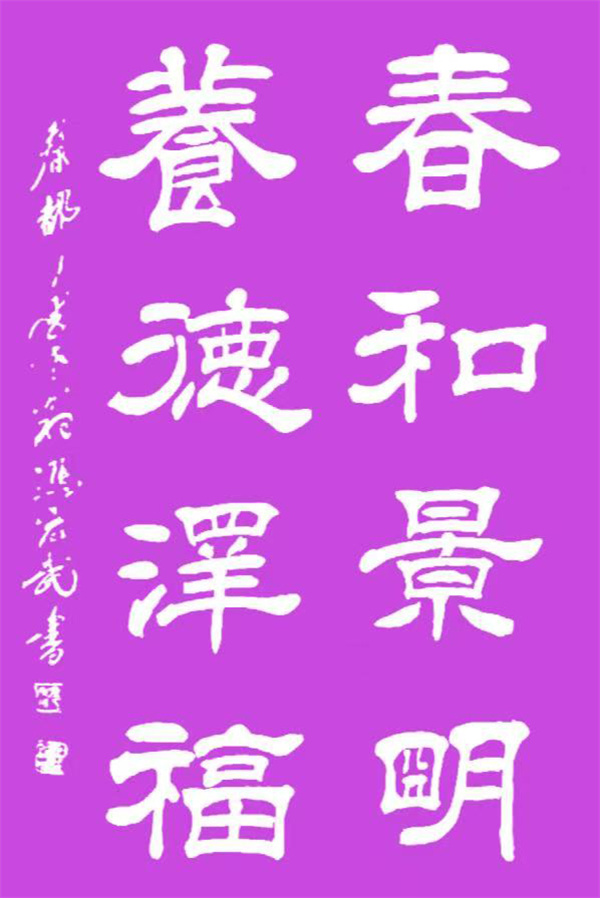
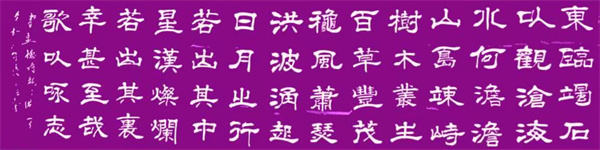
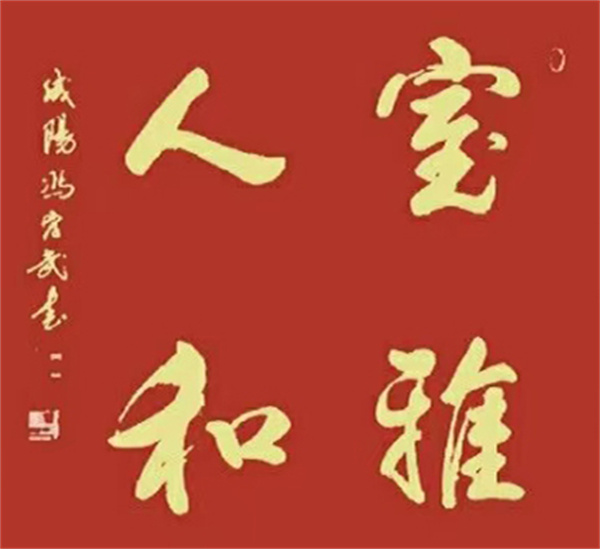
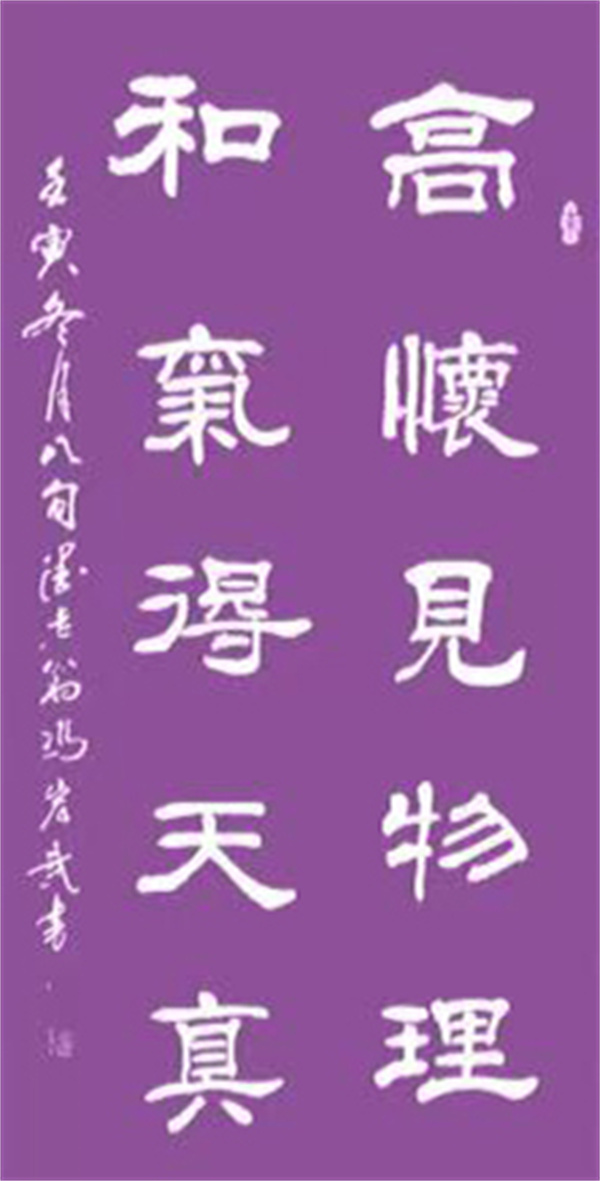
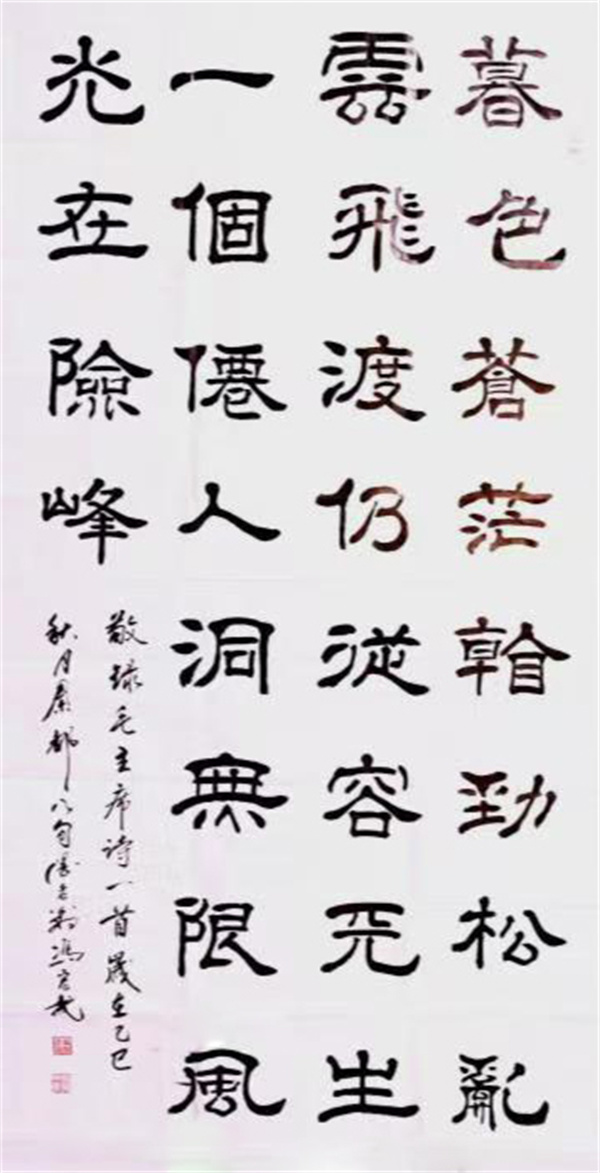
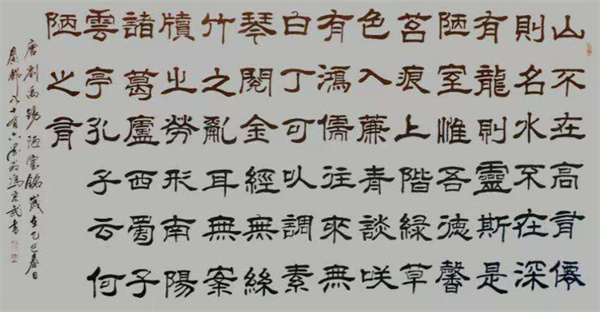
Feng Hongwu's clerical script has a brushwork that is in line with the "Xuanhe Shupu" evaluation of Han Li's "flying brushstrokes, forming one by one between dots and paintings": horizontal strokes are like "folding knife heads" cutting through square and hard, and waves are like "silkworm heads and tails" stretching and not charming, which is exactly the essence of Han Li as described by Wu Qiuyan as "square and ancient, firmly prepared".
He did not adopt the voluptuous and charming style of the Tang dynasty, but followed the aesthetic of the Song dynasty's "valuing Han and belittling Tang" - Jiang Kui said, "The literati began to value Han and belittling Tang." Feng Hongwu was using "Zhang Qian" and "Yi Ying" as a basis to turn the "clear power" of the Han dynasty into his own. Its character structure is broad and broad, but not flat and vulgar, such as "De" and "Chun", which are appropriately restrained and refined, in line with Huang Bosi's ancient clerical style of "round and elegant, with a flat and flat character shape that is not flattened"; In the brushwork, one can see both the elegant and powerful style of the Song Dynasty, as well as the praise of Fan Chengda for the "Han style brushwork and wrist strength". The combination of old and spicy elements reveals simplicity and simplicity, which cannot be compared to "vulgar officials".
Youke Dao's calligraphy plaques are inscribed with vermilion brush on the base of the stone, exuding a simple and elegant vitality - both adhering to the practical essence of clerical script as a "supplementary script", and using the relaxed state of retirement to eliminate the coldness and hardness of inscriptions, allowing "elegance" and "strength" to blend into daily brushwork. As Huang Tingjian once said, "With morality in one's heart, books are precious." Feng Hongwu's calligraphy is a "de vulgarity" book that has been refined over time. In the contemporary trend of exquisite clerical script, it embodies the ancient style of Han and Wei, the elegance of Song people, and the truth of a common calligrapher.




Copyright Notice: Original content on this website is welcome to be reposted. Please indicate the source when reposting, Global Art Network www.caanets.com; Some of the content posted on this website comes from the internet. If there is any infringement, please contact this website to delete it.
Daily recommendations
- [Exhibition]Sketching Public Education ...
- [News]Russian Avant garde Art Exhibition
- [News]Stone Tiger's Last Ten Yea...
Weekly hot topics
- 1Tianyu Ballad showcases the ...
- 2Wu Shanming Chinese Brush In...
- 3Three calligraphers go to Pi...
- 4Kunyun Danqing · Yongkun Op...
- 5The Art Exhibition of 'Circu...