闵凡沛Min Fanpei
2025-11-19 16:33:50 Art weekly
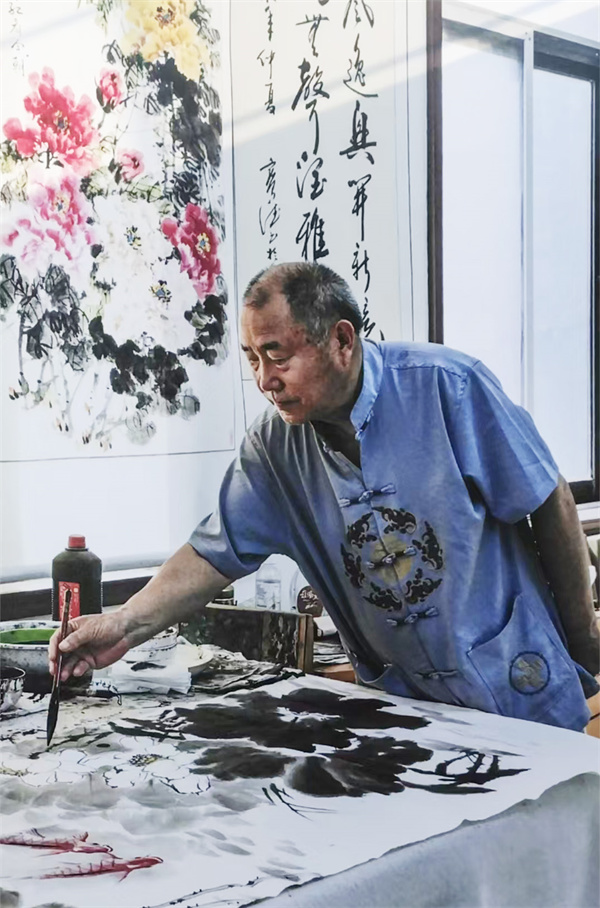
Min Fanpei, from Pei County, Jiangsu Province. I have had a passion for calligraphy and painting since childhood, and have been exposed to works of famous artists in my spare time. In 1969, I studied at Shijiazhuang Correspondence College of Literature and Art, and after retirement, I studied calligraphy and painting at Peixian Senior University, where I received guidance from teachers Jiang Liyu and Zhao Yuanlei. His works have participated in national calligraphy and painting competitions multiple times, and have been published in the Journal of Calligraphy, China Calligraphy and Painting Guide, and China Elderly Daily. It has been included in the "Exhibition of Chinese Calligraphy and Painting Masterpieces", "Collection of Contemporary Chinese Calligraphy and Painting Art", "Collection of Fine Calligraphy and Painting Works", "Collection of Excellent Calligraphy and Painting Grades in Xuzhou Region", etc. I am currently a member of the Chinese Elderly Calligraphy and Painting Society, a contracted calligrapher and painter for the "Chinese Calligraphy and Painting Guide", a member of the Chinese Elderly Calligraphy and Painting Research Association, a member of the Jiangsu Elderly Calligraphy and Painting Research Association, a member of the Xuzhou Calligraphy Association, a member of the Xuzhou Elderly Calligraphy and Painting Research Association, and a member of the Peixian Elderly Calligraphy and Painting Association.
Ink rhymes convey emotions, and the charm is naturally formed
——A Glimpse into Min Fanpei's Flower and Bird Painting Art
Huang Jinliang (Editor in Chief of Chinese Painting and Calligraphy Guide)
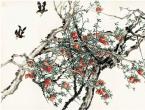
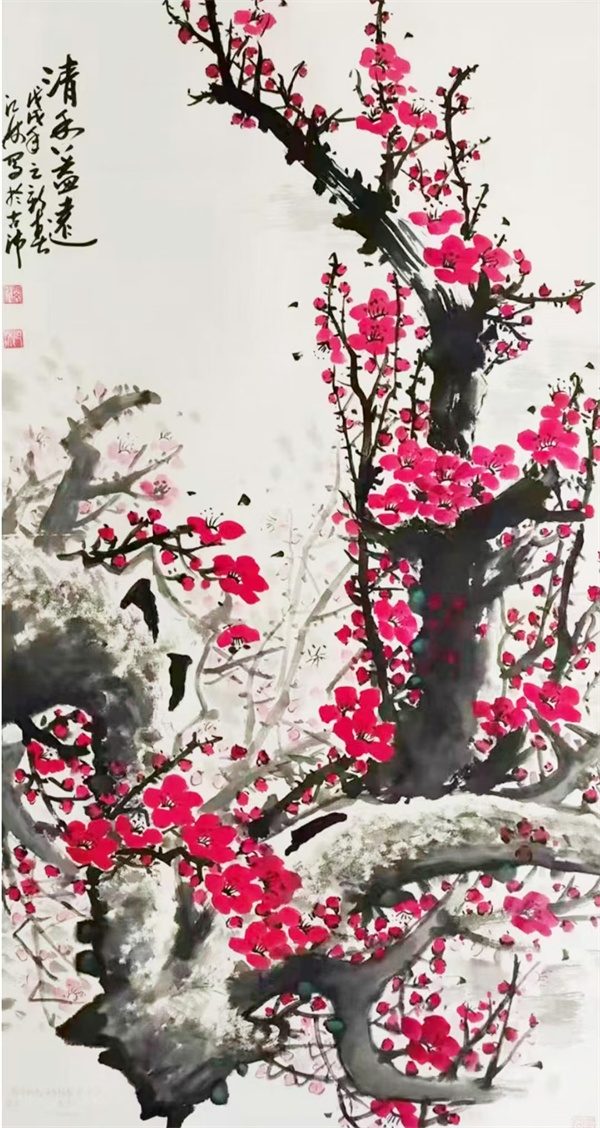
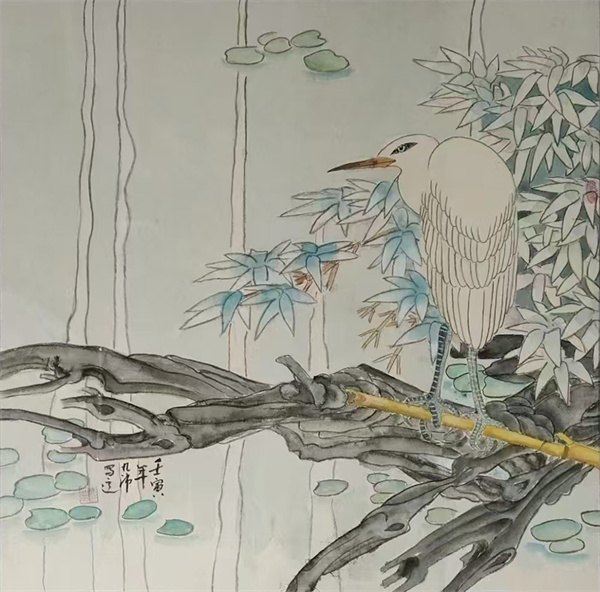
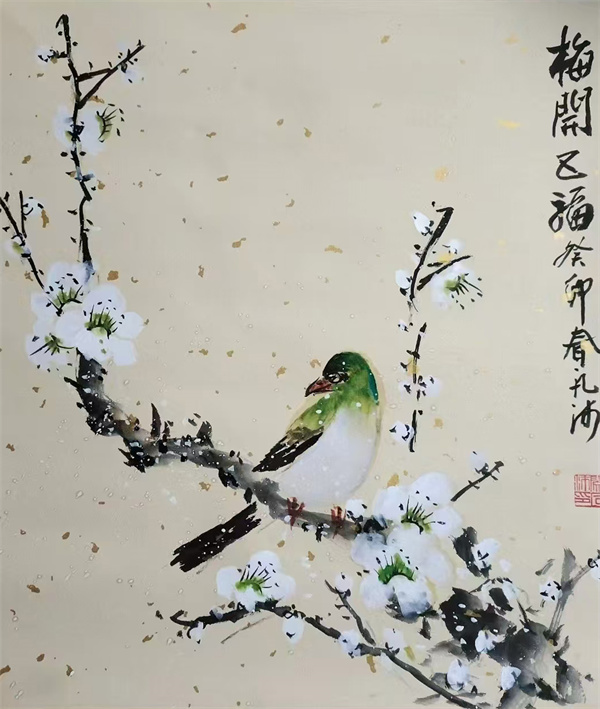
Min Fanpei's flower and bird paintings explore contemporary interest in traditional brushwork, pursuing a natural charm between the appearance of objects, and fully demonstrating the aesthetic purpose of Chinese freehand flower and bird painting, which is to "depict the spirit with form and establish the image with meaning". His works are based on tradition but not on antiquity, deeply capturing the free and unrestrained style of Xu Wei's "ink play" and the ethereal simplicity of the Eight Great Mountain People. Observing its plum blossom series, such as "Plum Blossoms Like Snow and Snow", it depicts old stems and twisted branches in dark and light ink colors, with a vigorous and vigorous brushwork between withering and moistening; White plum blossoms are dyed with elegance and complexity, just like the spirit of Wang Mian, a master of plum blossom painting in the Yuan Dynasty, who said, 'Do not praise the color, only leave the pure air to fill the universe.' In the layers of black, white, and gray, they convey the spiritual character of plum blossoms proud of snow. The red plum in 'Fragrant and Distant Fragrance' breaks through ink with its bright colors, strong yet not vulgar. Through the collision of ink and color, it radiates the contemporary vitality of traditional themes.
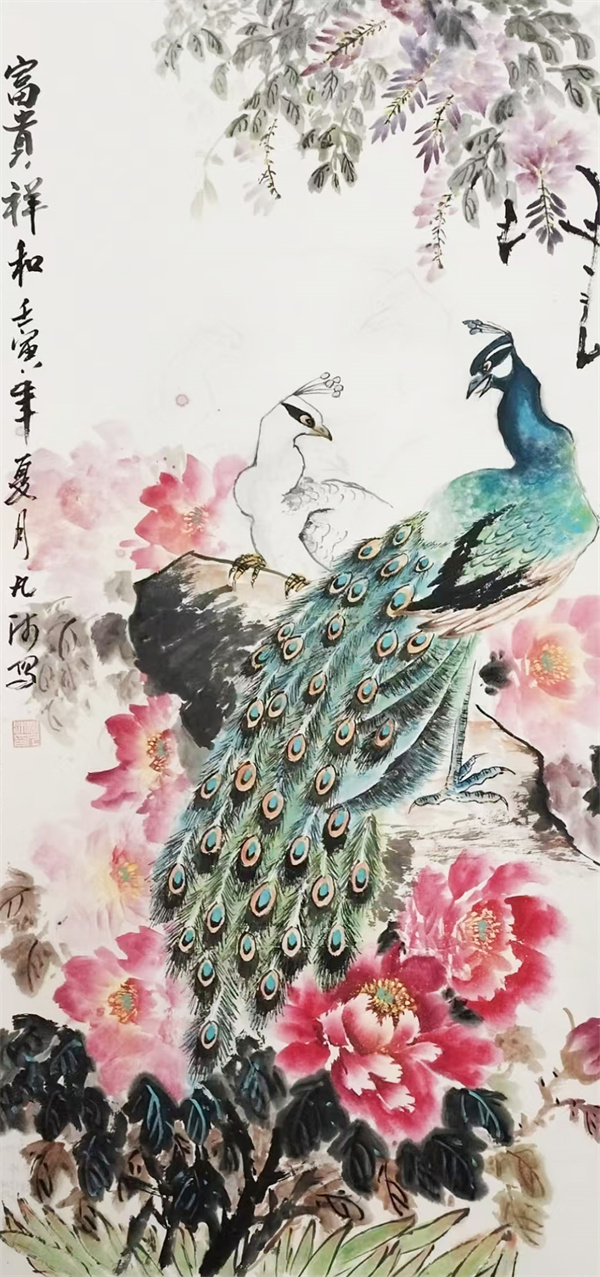
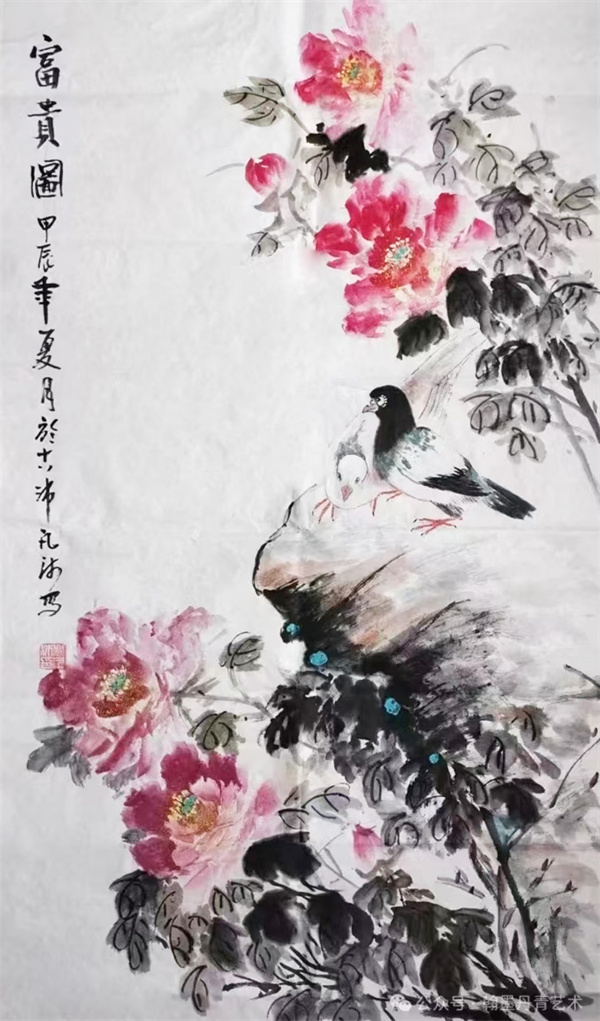
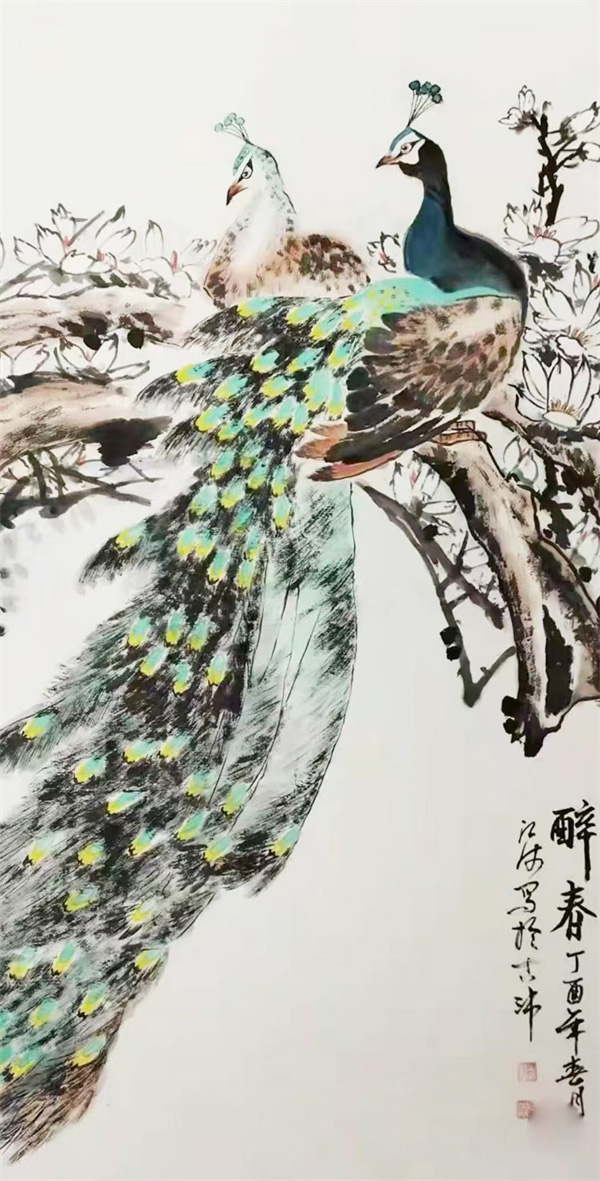
In terms of subject matter selection, Min Fanpei prefers auspicious imagery, but can find elegance in the mundane. The peonies in the painting 'The Wealth and Prosperity' are written in a way that is boneless, with flower heads that are both thick and light, showcasing the grace of the 'king of flowers'; The vivid expressions of the birds and poultry in the combination reflect the beauty of both form and spirit, which is in line with the aesthetic standard of the Song Dynasty painting academy's emphasis on both form and spirit. The peacocks and peonies in "Fortune, Prosperity, and Harmony" are brightly colored but not vulgar. The detailed depiction of the peacock feathers is exquisite, contrasting with the freehand brushwork of the background ink painting. It is a skillful use of the "combination of work and writing" technique, which not only demonstrates the painter's brush and ink skills, but also conveys the beautiful wish of "prosperity, prosperity, and harmony".
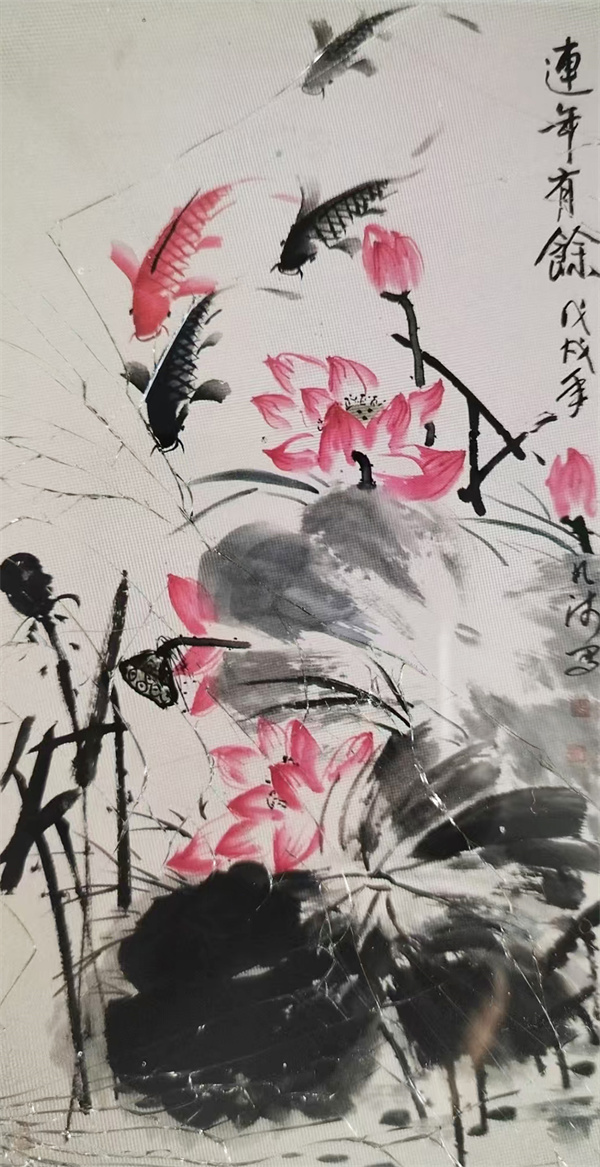
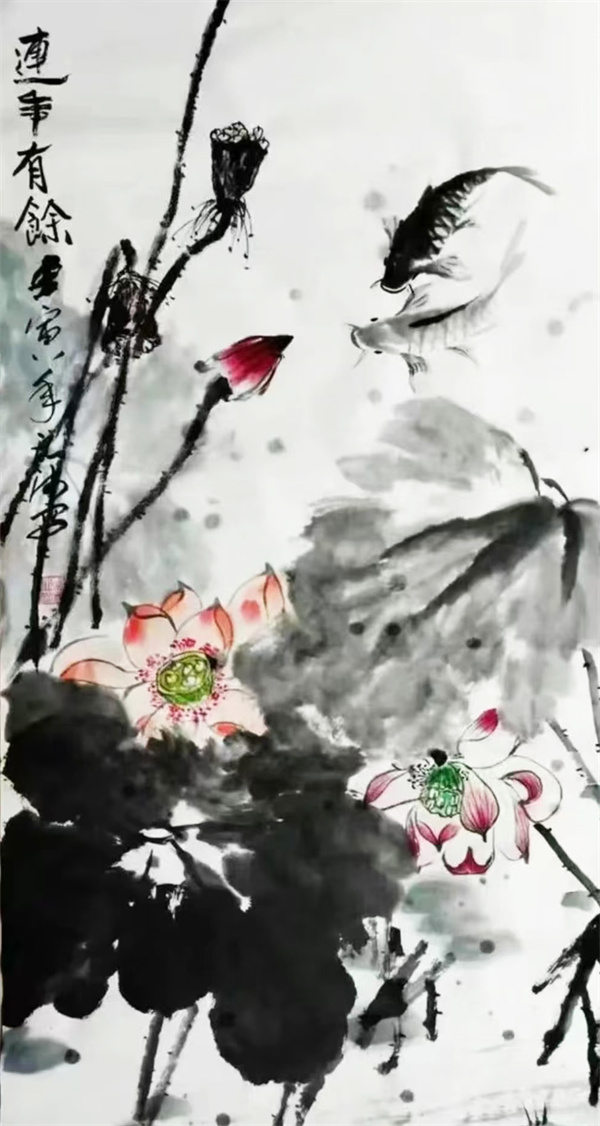
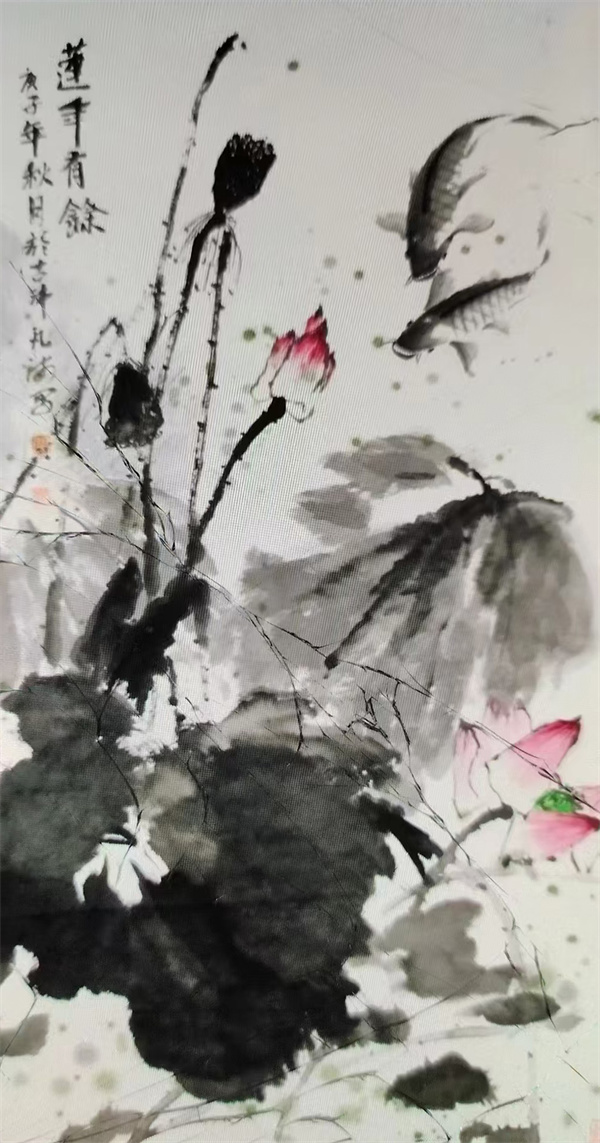
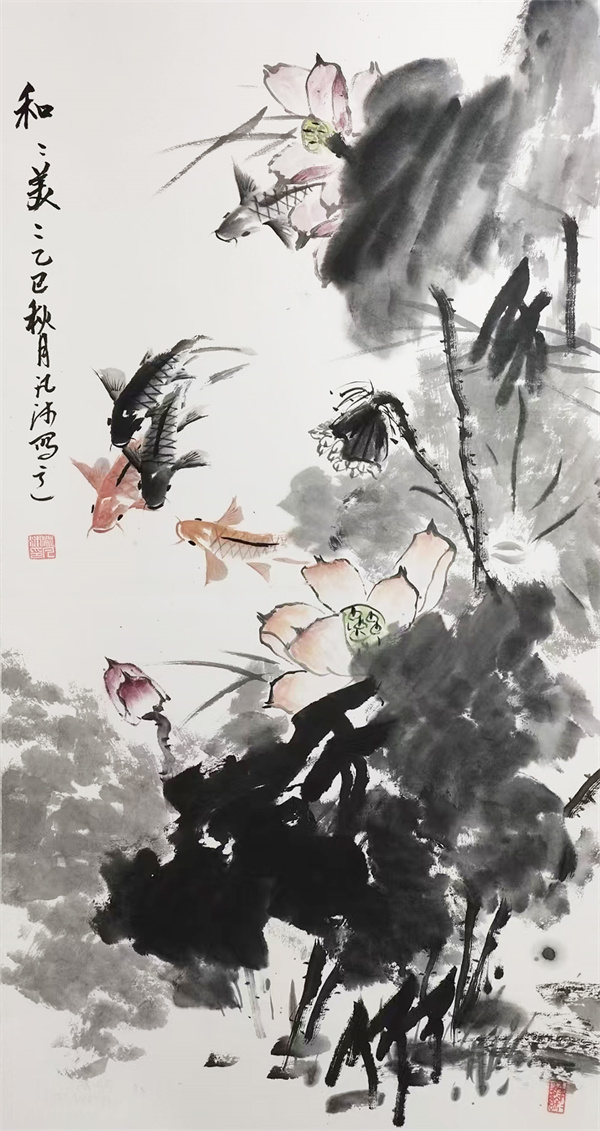
In addition, his works also reflect the pursuit of "meaning beyond the picture". The painting 'The Longevity of Pine and Crane' features pine and crane trees, pine needles with sharp brushstrokes, and ancient crane shapes. The brushstrokes contain expectations for longevity and health, making it a vivid interpretation of traditional auspicious painting themes; The lotus and fish swimming in "Years of Surplus" are vividly depicted in ink wash, with a lively and dynamic appearance of the fish and an elegant lotus state. The auspicious meaning of the homophonic words "fish" and "surplus" is naturally expressed in freehand brushwork, without any sense of carving.
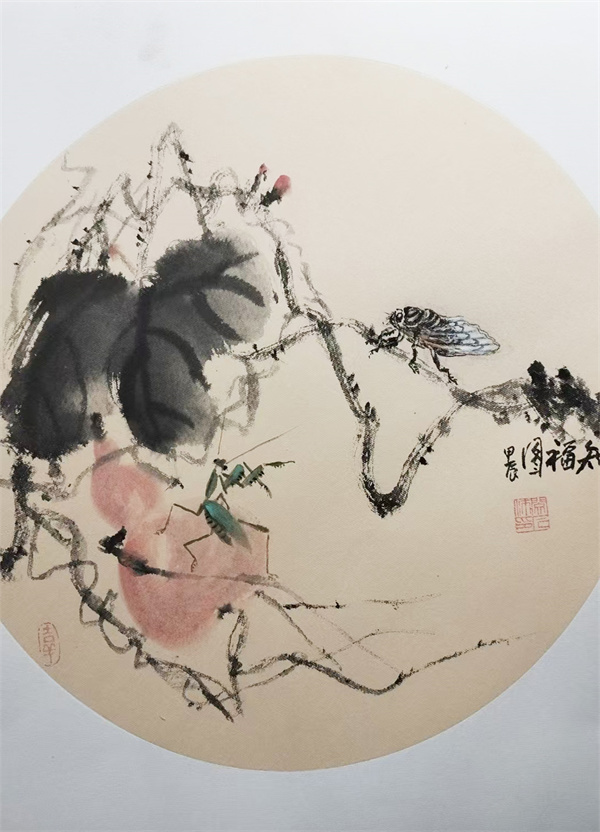
Min Fanpei's flower and bird paintings emphasize the "calligraphic quality" in their brushwork language, and every stroke reflects their calligraphy skills; In terms of composition, the emphasis is on "density and coherence", such as the interweaving of plum branches and the embellishment of birds in "Five Blessings of Plum Blossoms", which conform to the compositional wisdom of "counting white as black". He takes traditional brush and ink as the foundation, and life interest as the nutrient, making the flowers, birds, insects, and fish in his works have both classical aesthetic charm and contemporary aesthetic vitality. In the balance of inheritance and innovation, he has embarked on a path of flower and bird creation that is both elegant and popular, adding a touch of vitality to the contemporary freehand flower and bird painting world.



Copyright Notice: Original content on this website is welcome to be reposted. Please indicate the source when reposting, Global Art Network www.caanets.com; Some of the content posted on this website comes from the internet. If there is any infringement, please contact this website to delete it.
Daily recommendations
- [Exhibition]Sketching Public Education ...
- [News]Russian Avant garde Art Exhibition
- [News]Stone Tiger's Last Ten Yea...
Weekly hot topics
- 1Tianyu Ballad showcases the ...
- 2Wu Shanming Chinese Brush In...
- 3Three calligraphers go to Pi...
- 4Kunyun Danqing · Yongkun Op...
- 5The Art Exhibition of 'Circu...