阳海波Yang Haibo
2025-11-18 09:43:09 Art weekly
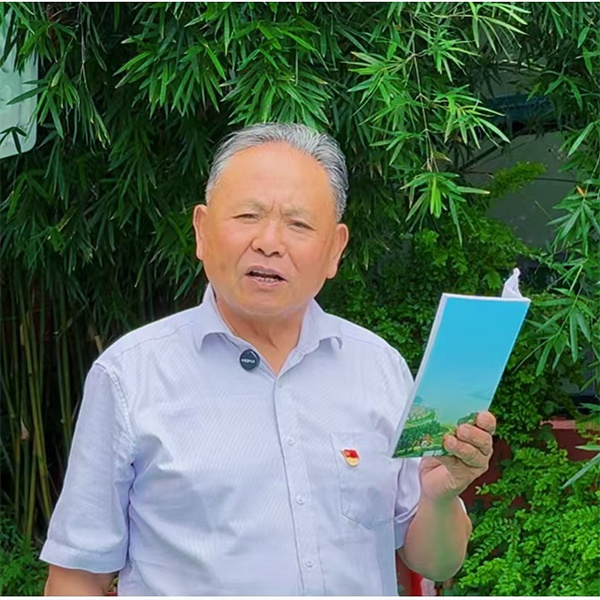
Yang Haibo, male, born in 1946, holds a university degree, is a member of the Communist Party of China, and holds the titles of economist and accountant issued by the Provincial Personnel Bureau. He has been engaged in rural economic management throughout his life. In 1992, he was awarded the National exemplary individual in Rural Economic Management by the Ministry of Agriculture, and awarded a gold medal and certificate. In 1991, he was named exemplary individual of Anhui Province in flood fighting and disaster relief.
After retirement, I diligently studied and copied Ouyang Xun, Liu Gongquan's regular script, Wang Xizhi's running script, and Hanli Xiaozhuan. In 2015, I participated in the "Calligraphy Training Class" of the Chinese Calligraphy and Painting Guide, and received personal lectures and guidance from famous calligraphy and painting mentors such as Zhai Wanyi, Vice Chairman of the Chinese Calligraphers Association, Wei Keyi, Huang Naiji, Wu Yongxiong, He Kaixin, Huang Jinliang, Zhang Guozhong, Guo Lin, etc. Currently a member of the Chizhou Calligraphers Association, the Chinese Elderly Calligraphers and Painters Association, the Vice President of the Art Committee of the Chinese Poetry and Calligraphy Network, a member of the Chinese Hard Pen Calligraphers Association, a specially appointed calligrapher and painter of the Anhui Contemporary Calligraphy and Painting Research Institute, and a first-class calligrapher and painter of the Global Hanmo Culture and Art Institute.
In 2014, he won the gold medal at the China Orange Island Calligraphy Art Exhibition and was awarded the title of "Chinese Red Calligraphy Master". In April 2015, he won the Best Creation Award at the 2nd National Middle aged and Elderly Calligraphy and Painting Competition. In June 2015, his works were exhibited at the Anhui Senior University System's "Commemoration of the 70th Anniversary of the Victory of the War of Resistance Against Japan Calligraphy and Painting Photography Exhibition". In November 2015, he won the second prize at the National Poetry and Calligraphy Artists Creation Annual Meeting. In December 2015, he won the silver prize at the 3rd National Middle aged and Elderly Calligraphy and Painting Creation Exchange Seminar. In 2016, he won the Best Creation Award at the 3rd National Middle aged and Elderly Calligraphy and Painting Competition. In May 2018, he won the second prize at the National Middle aged and Elderly Calligraphy and Painting Competition to celebrate the 40th anniversary of reform and opening up. In February 2019, he was awarded the "Top 100 Chinese Honorary title of" Character ", won the gold medal in the middle-aged and elderly category of the" Ode to the Motherland "National Calligraphy and Painting Competition in October 2019, and the excellent teacher award In April 2021, the calligraphy and painting contest celebrating the 100th anniversary of the founding of the CPC won the gold medal, and was awarded the title of "Red Heart to the Party, Chinese Meritorious Artist". In June 2023, the first calligraphy and seal cutting biennial exhibition of "Great Beautiful Crane Lake, Ecological Chizhou" hosted by Anhui Calligraphers Association, and the Huangmei opera song "Water Hometown" written by the artist entered the exhibition. In June 2024, he joined Anhui Calligraphers Association after being approved by Anhui Calligraphers Association.
The spirit is reflected in the rules, and the spirit is revealed in the inheritance
——Impressions of Yang Haibo's Calligraphy
Huang Jinliang (Editor in Chief of Chinese Painting and Calligraphy Guide)
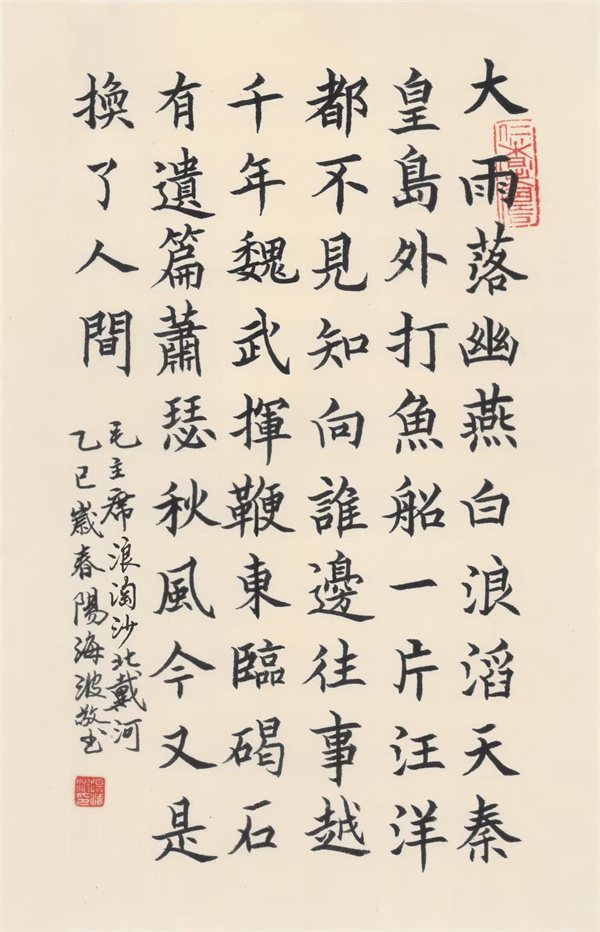
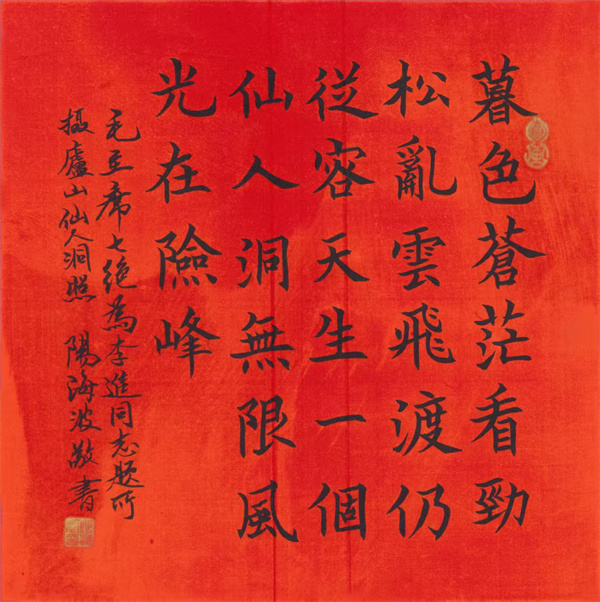
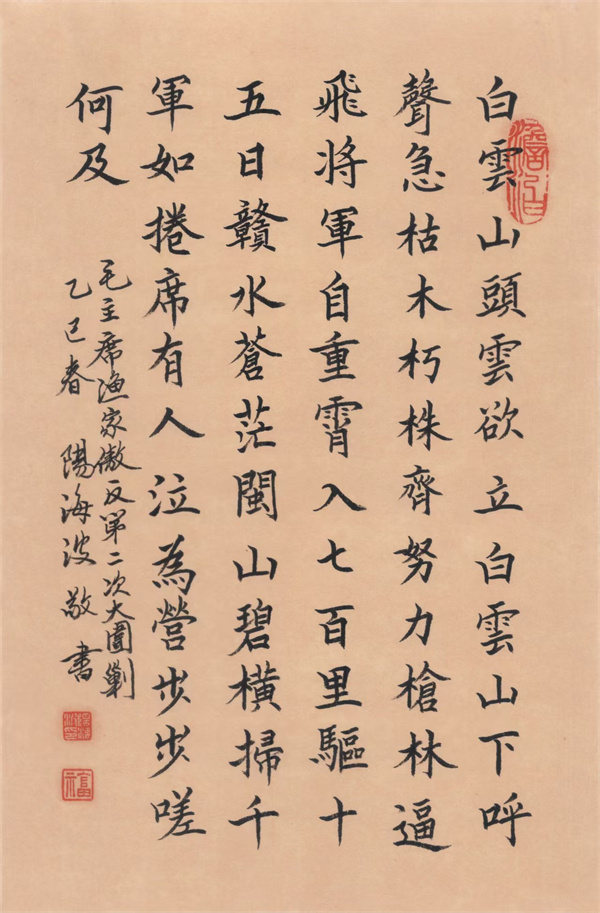
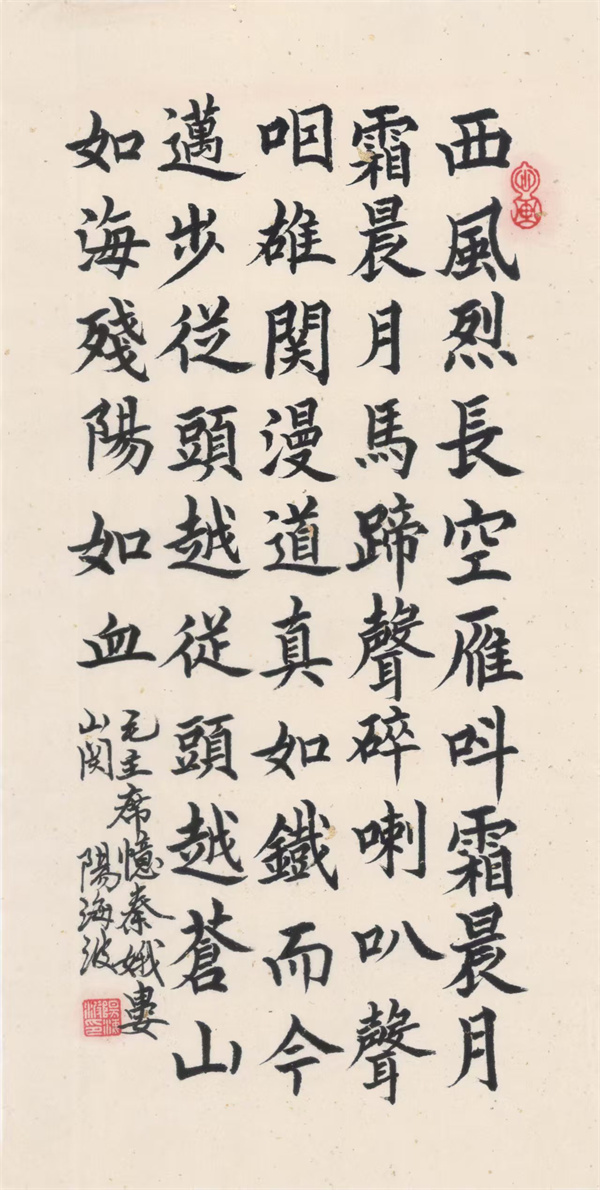
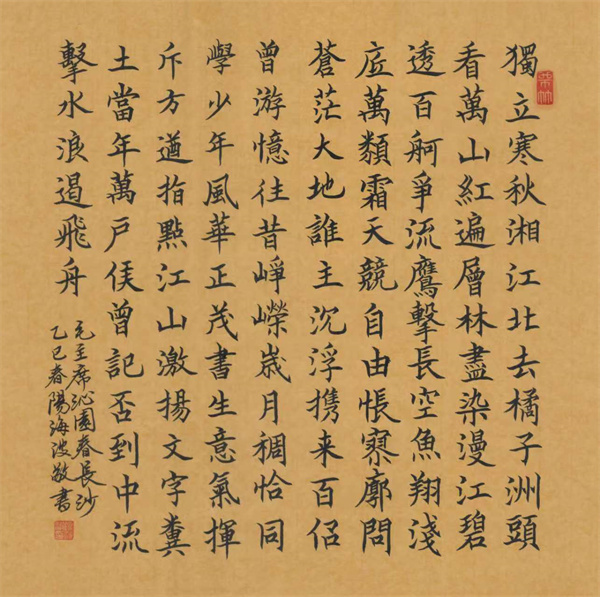
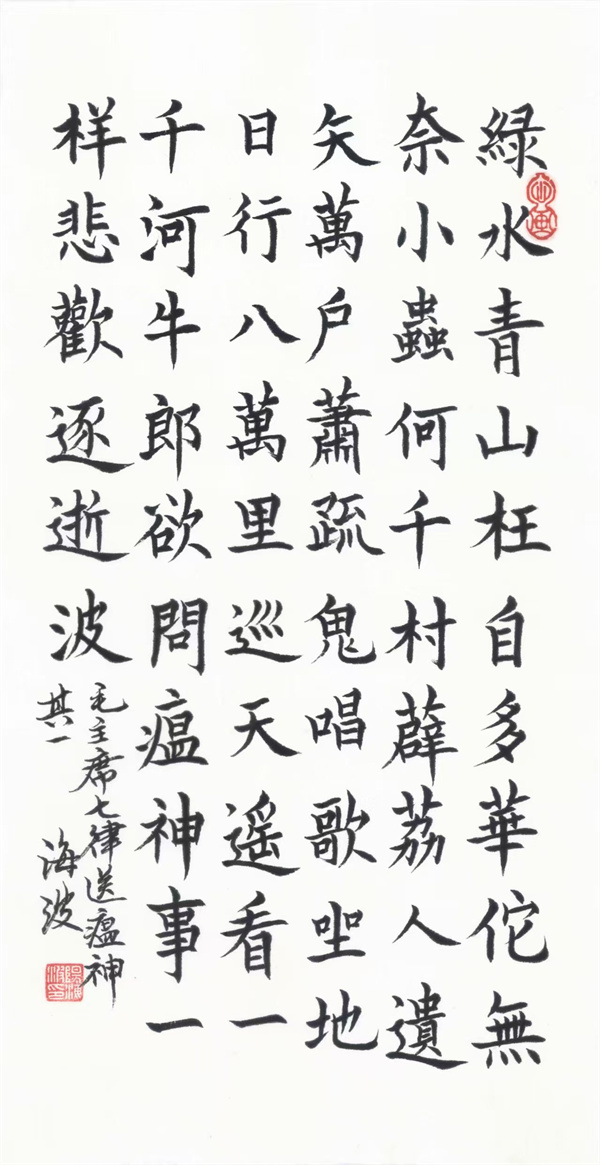
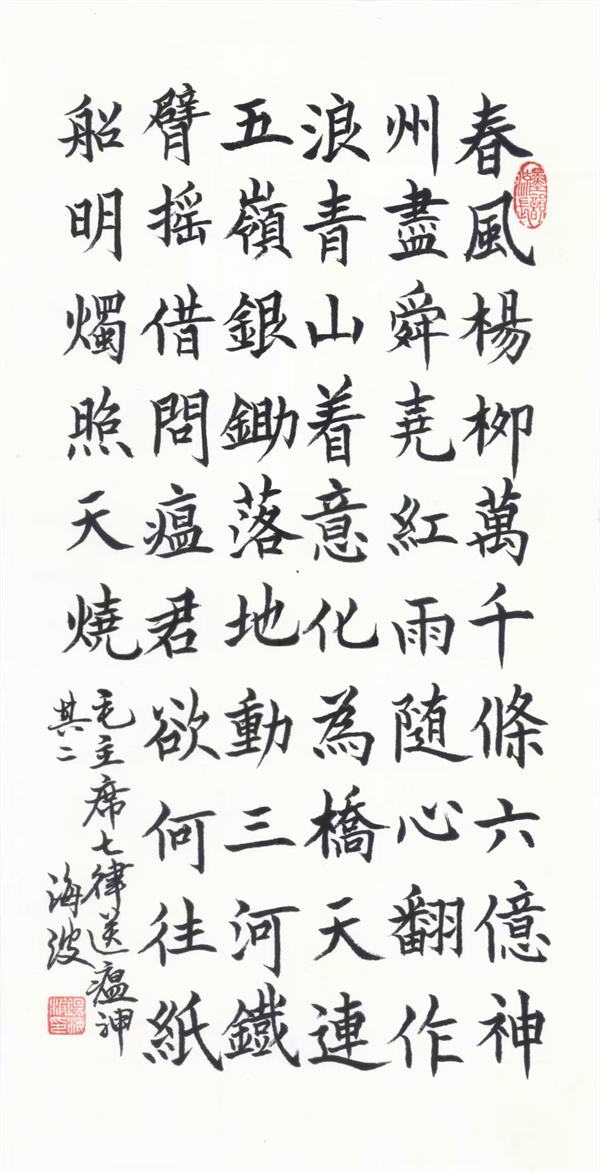
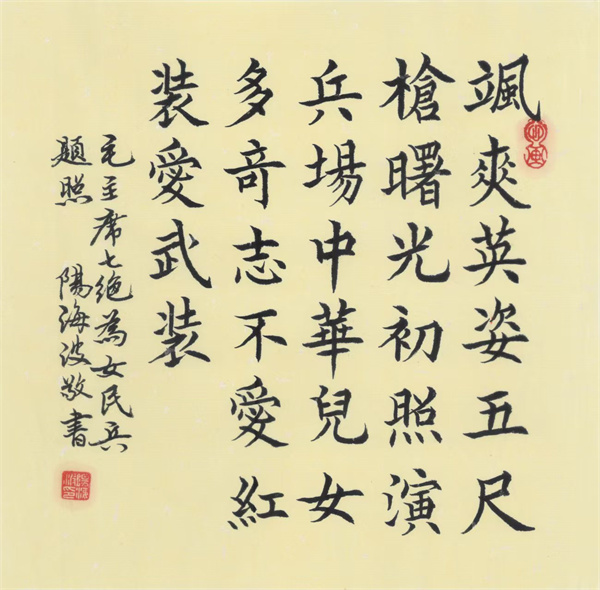
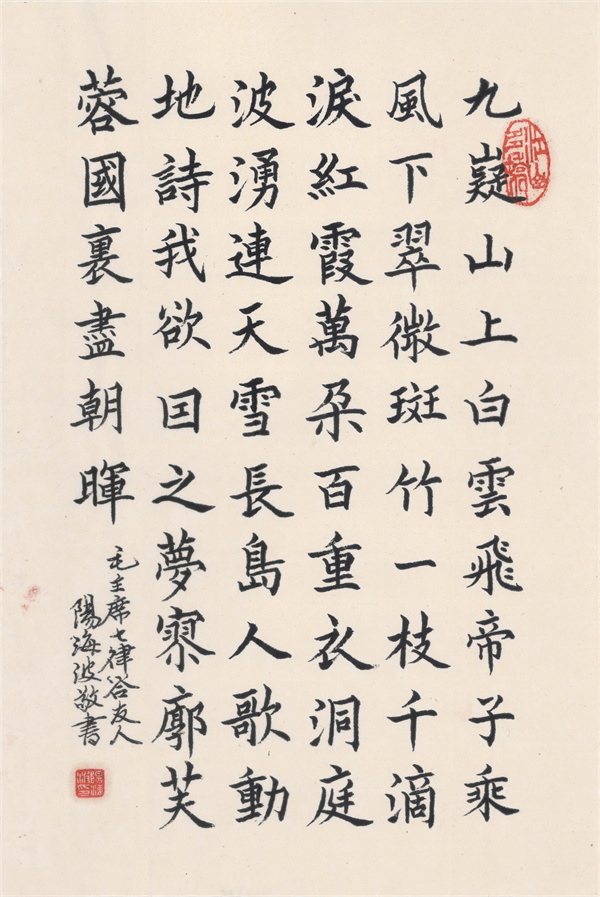
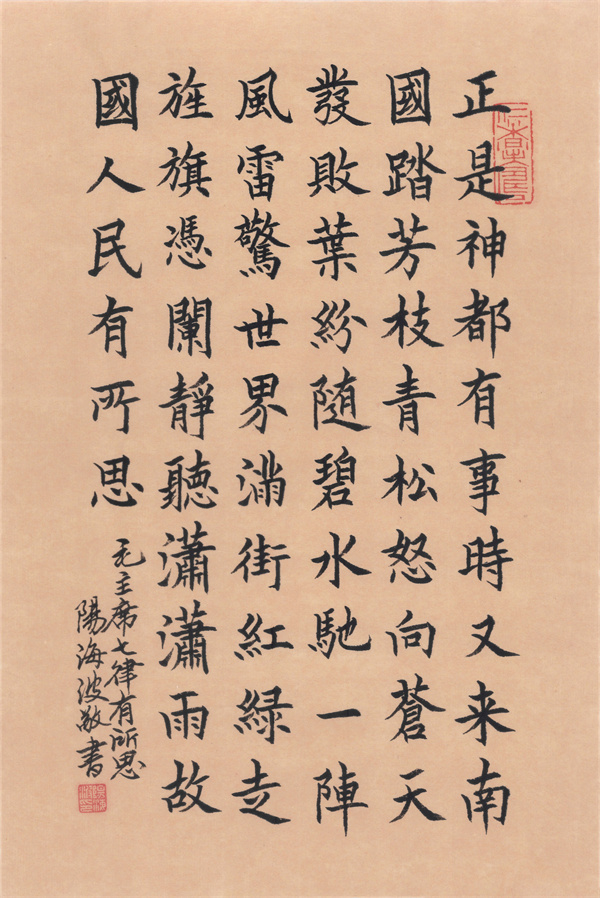
In the long river of Chinese calligraphy art, regular script is like a rock and pillar, carrying the aesthetic pursuit of "seeking its strokes and serving its backbone". The calligrapher Yang Haibo's regular script creation is deeply rooted in the Tang Kai method, seeking novelty in the context of the times, and demonstrating the artistic character of "both carving and carving, returning to simplicity".
Yang Haibo's regular script is deeply rooted in the writing style system of Tang Kai masters such as Ouyang Xun and Yan Zhenqing. Looking at his works, the strokes are like a thousand mile cloud formation horizontally and a thousand year old withered vine vertically. In all his works, there are rules to follow when starting and ending the strokes, and when lifting and pressing, the strokes are full of ancient charm, which is in line with the ancient motto of "calligraphy should be based on the brush, and the finishing of characters also requires hard work". His calligraphy pursues the concept of "seeing danger in a flat and upright manner", with a hidden charm in the square and stable end, such as the line "Fishing boats outside Qinhuangdao" in "Langtaosha Beidaihe". The size of the characters is staggered but the charm is coherent, demonstrating the layout wisdom of "one point becomes one character, and one character is the final standard".
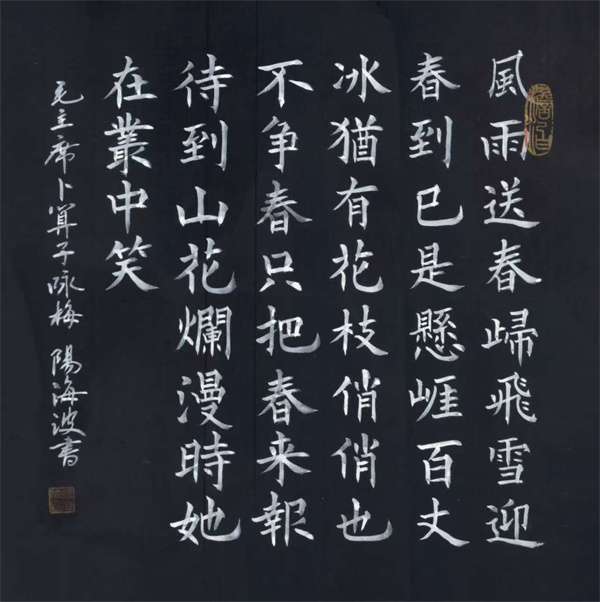
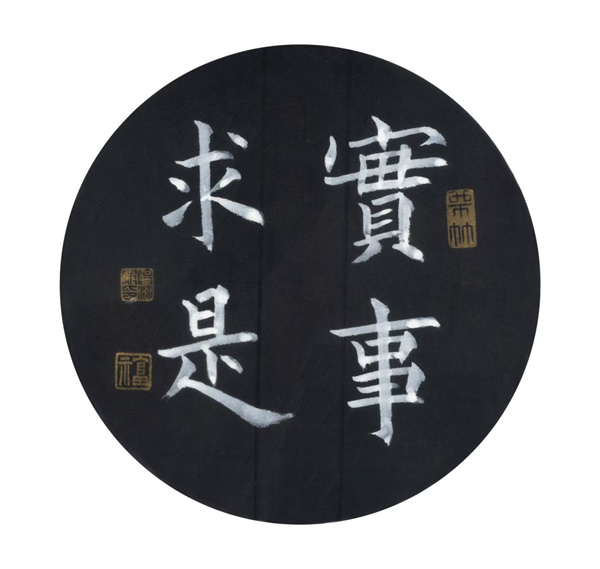
While inheriting the Dharma, Yang Haibo also incorporates his own understanding of brush and ink. His works either take the elegance of plain language or use the uniqueness of black background and white characters, with ink colors that are rich, light, dry, and moist, giving regular script the texture of "dry autumn wind, moist spring rain". He wrote Mao Zedong's poetry in regular script, blending the grandeur of revolutionary poetry with the solemnity of Tang Kai. For example, in "Qinyuan Spring - Changsha," the powerful brushwork of "Who controls the rise and fall of the vast earth" made calligraphy a concrete carrier of the spirit of poetry, achieving the dual expression of "calligraphy as the heart painting, poetry as the words and aspirations.
The ancient saying goes, 'Practice the ancient without sticking to the old, innovate without losing the foundation.' Yang Haibo's regular script creation is precisely the practice of this concept. He infused personal temperament and contemporary atmosphere into the rules of Tang Kai, giving new vitality to the ancient calligraphy style of Kai Shu in contemporary times, inheriting it through dots and paintings, and displaying its charm beyond the structure. It can be regarded as a typical practice of "upholding integrity and innovation" in contemporary Kai Shu creation.
Copyright Notice: Original content on this website is welcome to be reposted. Please indicate the source when reposting, Global Art Network www.caanets.com; Some of the content posted on this website comes from the internet. If there is any infringement, please contact this website to delete it.
Daily recommendations
- [Exhibition]Sketching Public Education ...
- [News]Russian Avant garde Art Exhibition
- [News]Stone Tiger's Last Ten Yea...
Weekly hot topics
- 1Tianyu Ballad showcases the ...
- 2Wu Shanming Chinese Brush In...
- 3Three calligraphers go to Pi...
- 4Kunyun Danqing · Yongkun Op...
- 5The Art Exhibition of 'Circu...