徐明阶Xu Mingjie
2025-11-16 12:06:59 Art weekly
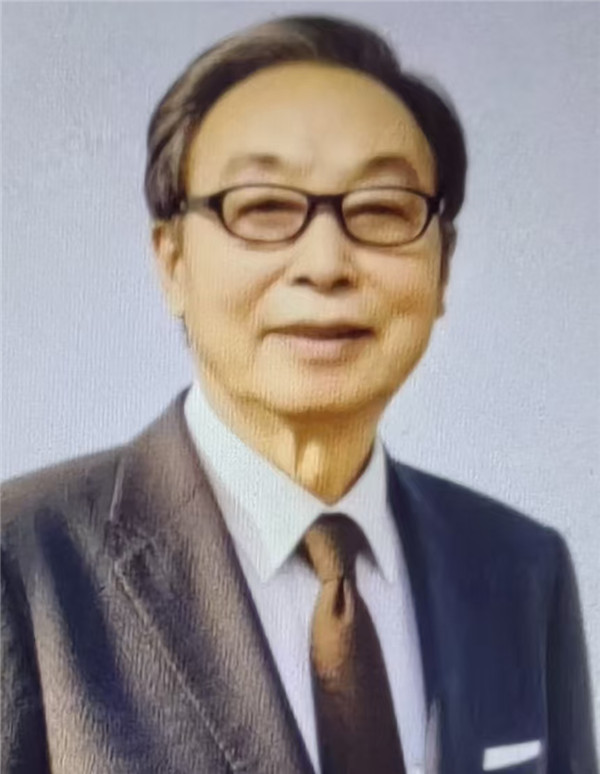
Xu Mingjie, male, from Sinan County, Guizhou Province. Formerly the Secretary of the Department of Economics and Management at Shijiazhuang Railway University, and a senior political engineer. Engage in calligraphy learning and research after retirement. In recent years, calligraphy works have won over 80 awards in provincial, municipal, and national calligraphy competitions, including 6 special gold awards and 2 special prizes. Among them, won a silver medal in the 2024 Spring Festival Gala National Calligraphy Competition; Won a gold medal in the 2023 and 2025 Spring Festival Gala National Calligraphy Competition; Won the gold medal in the 2025 Spring Festival Gala National Couplet Competition. In 2021, he was awarded the title of "Most Positive Art Worker" by the China Dream Culture and Art Research Institute. In 2023, he was awarded the honorary title of "China's Top 100 Calligraphy and Zisha Art Masters" by the Beijing Oriental Lanting International Calligraphy and Painting Art Center and the National Gift Treasure China Zisha Jury. In March 2024, the calligraphy work "Spring and Snow in the Qinqin Garden" was awarded the gold medal in the National Calligraphy and Painting Masters' Works Competition commemorating the 100th anniversary of Chairman Mao's creation of "Spring and Snow in the Qinqin Garden", and was included in the first collection of calligraphy and painting works by famous artists in Juzhou, China. At the same time, the honorary title of "Excellent Cultural Inheritor of the Chinese Nation" will be awarded. I am currently a member of the Shijiazhuang Calligraphers and Painters Association, a director of the Chinese Calligraphers and Painters Association, a member of the Cross Strait Calligraphers and Painters Association, and a member of the Hebei Provincial Elderly Calligraphers and Painters Research Association.
Brush and ink carry the message, and the spirit is passed down through generations
——The traditional adherence and contemporary expression of Xu Mingjie's calligraphy art
Huang Jinliang (Editor in Chief of Chinese Painting and Calligraphy Guide)
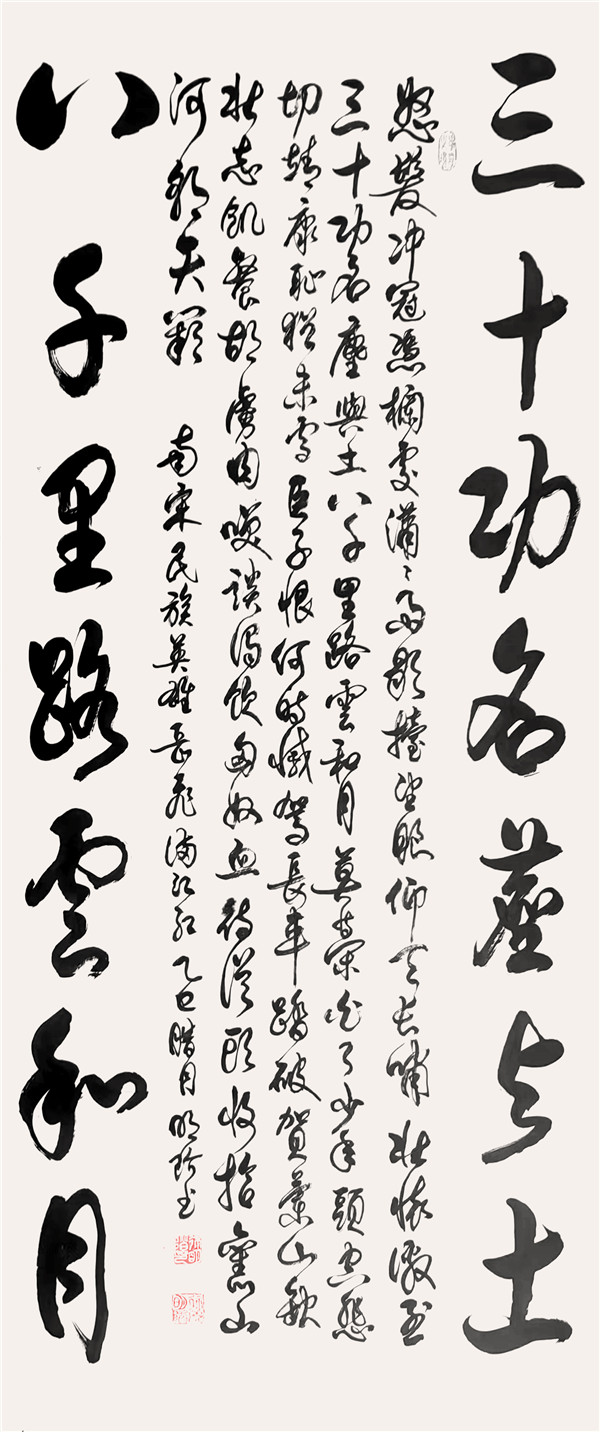
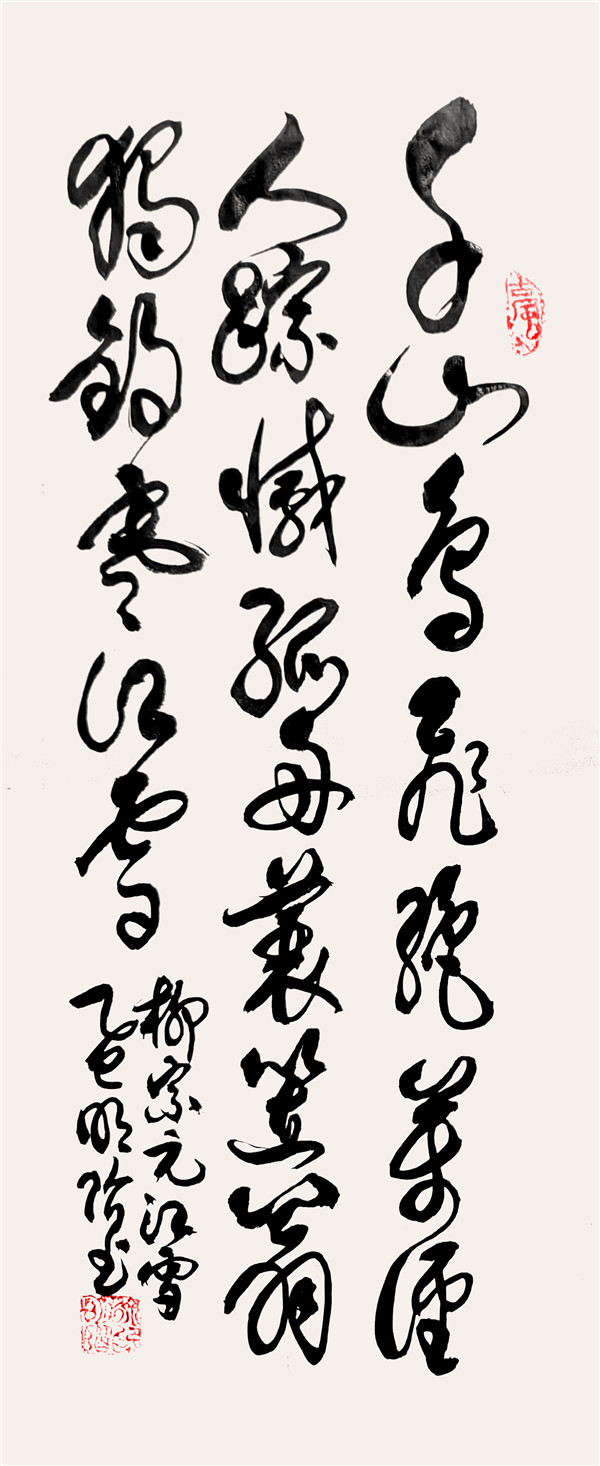
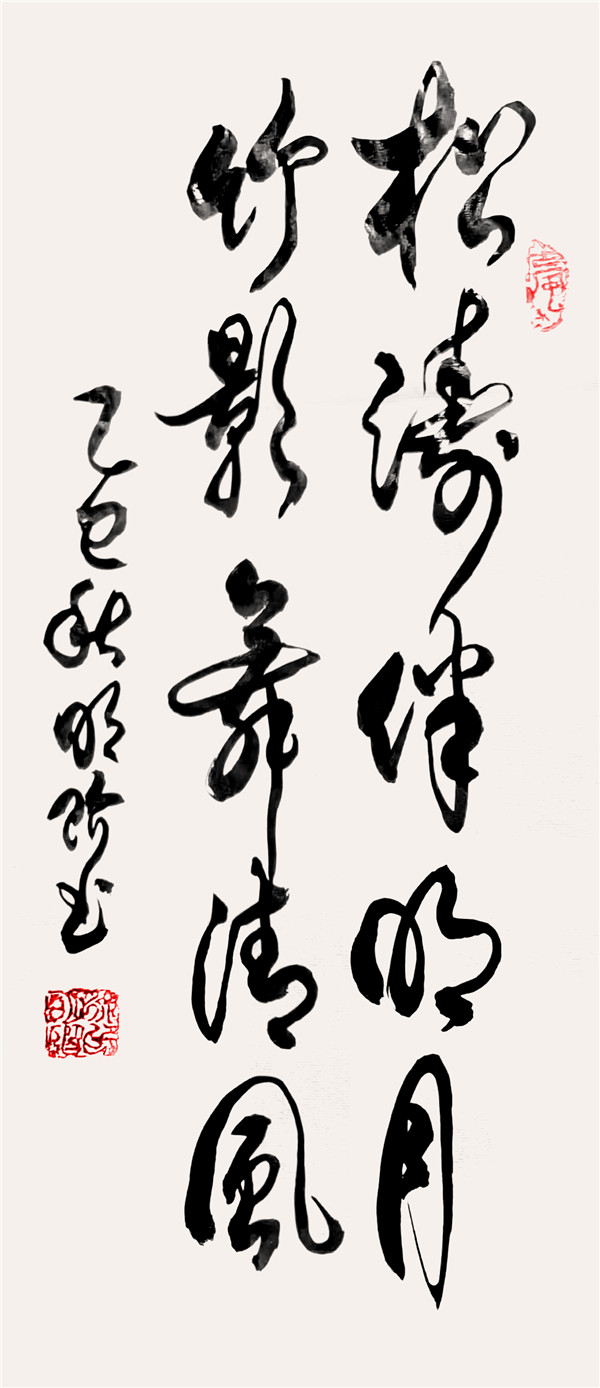
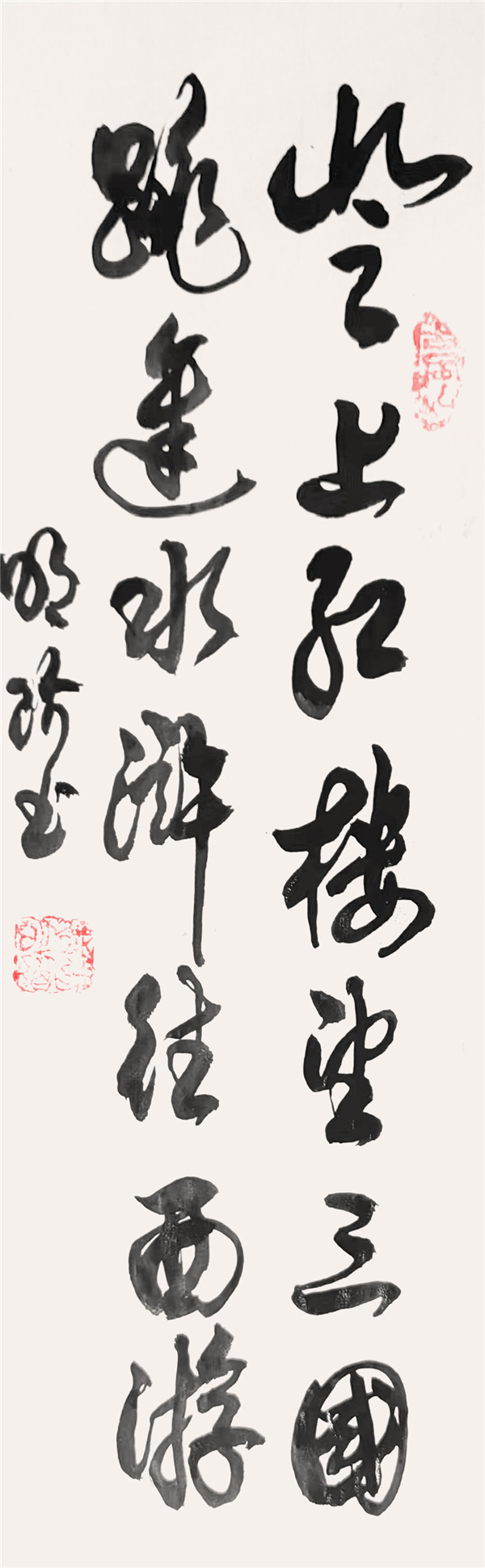
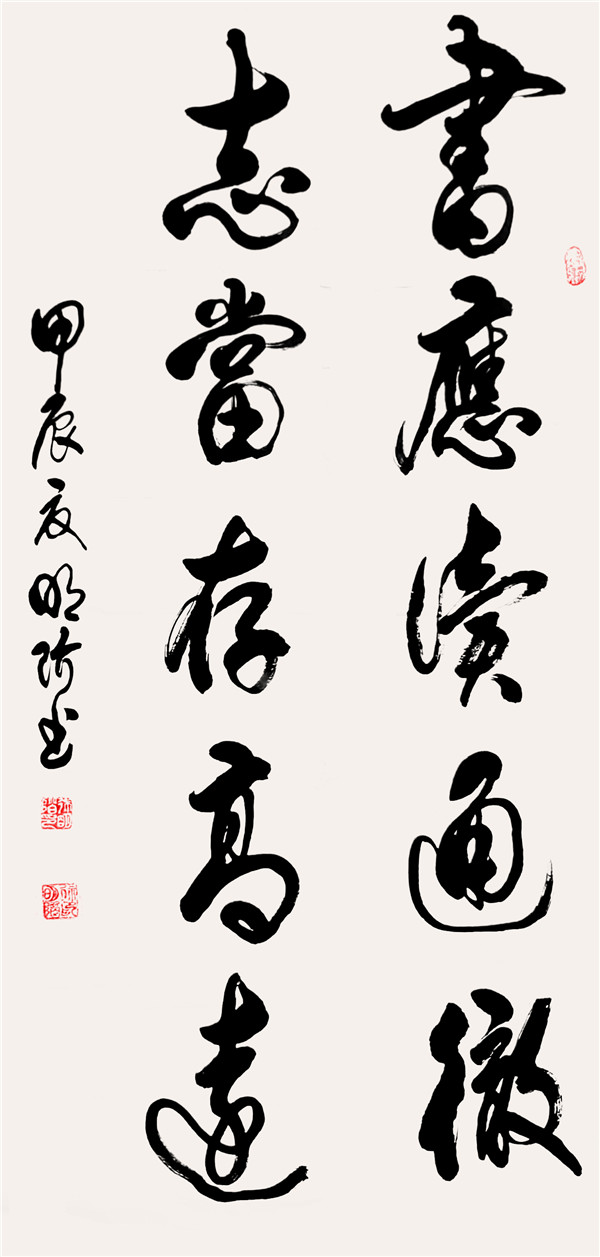
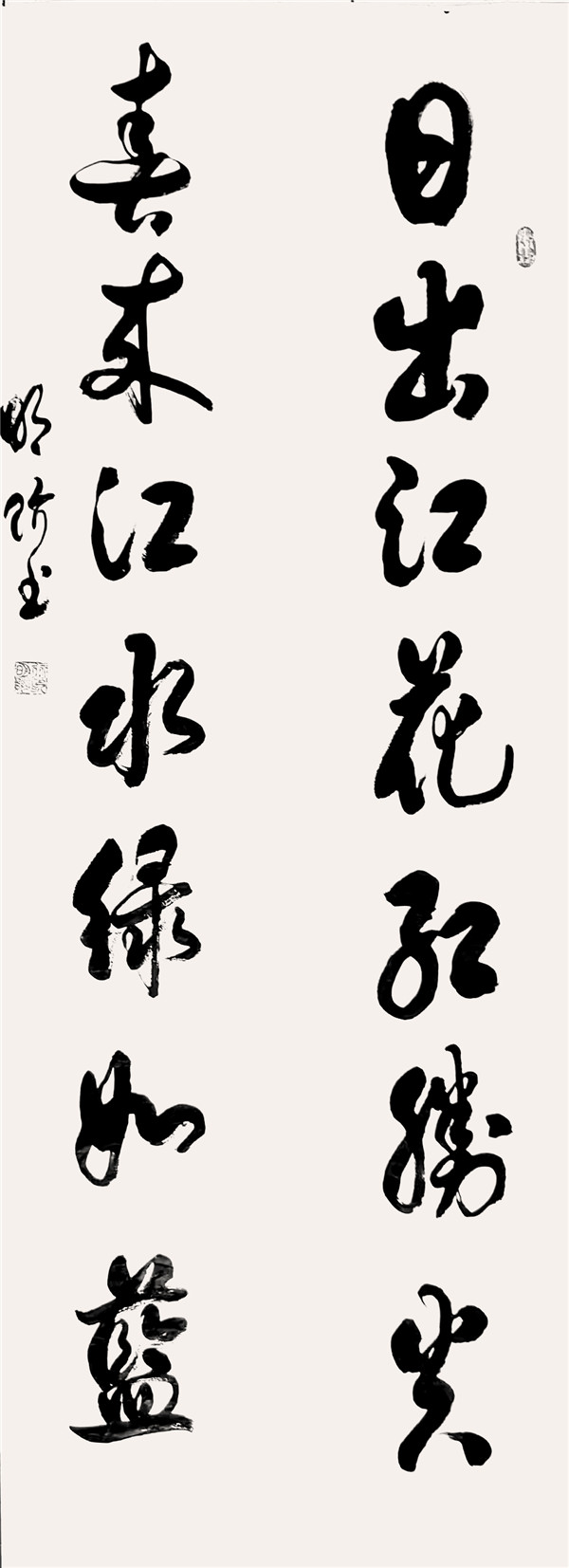
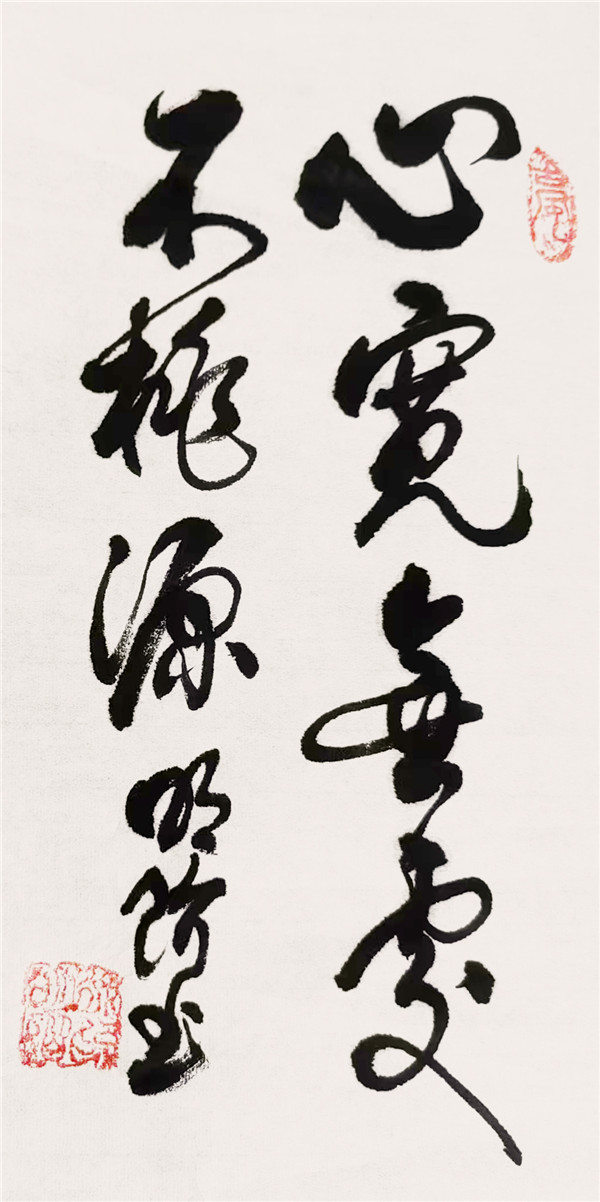
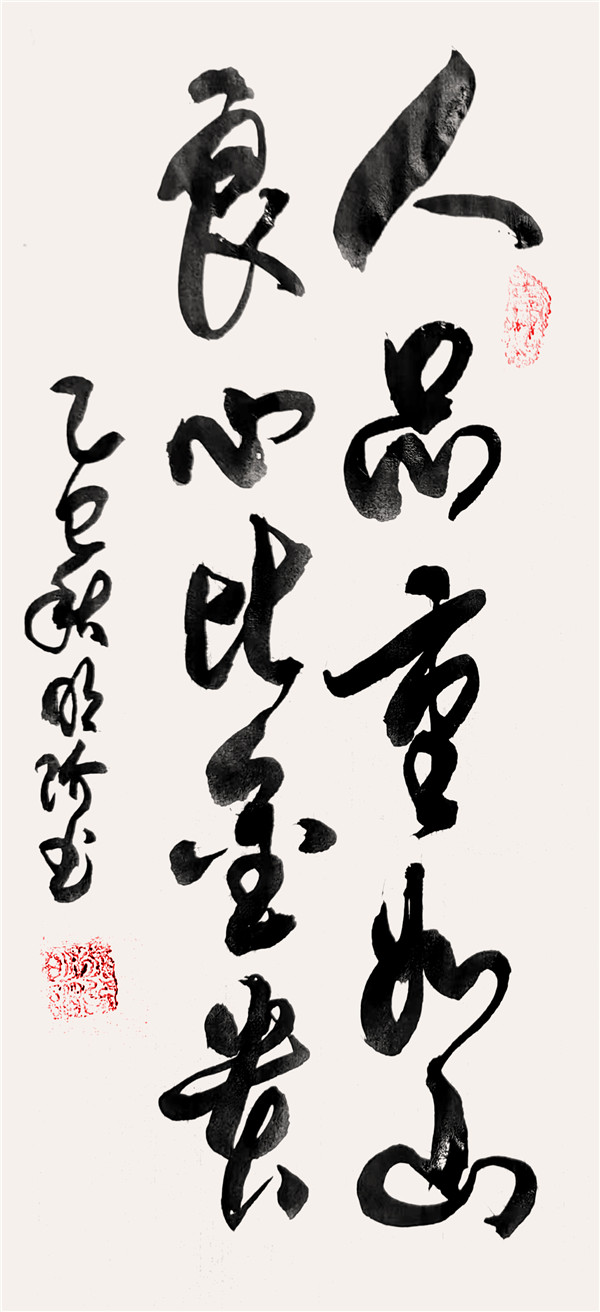
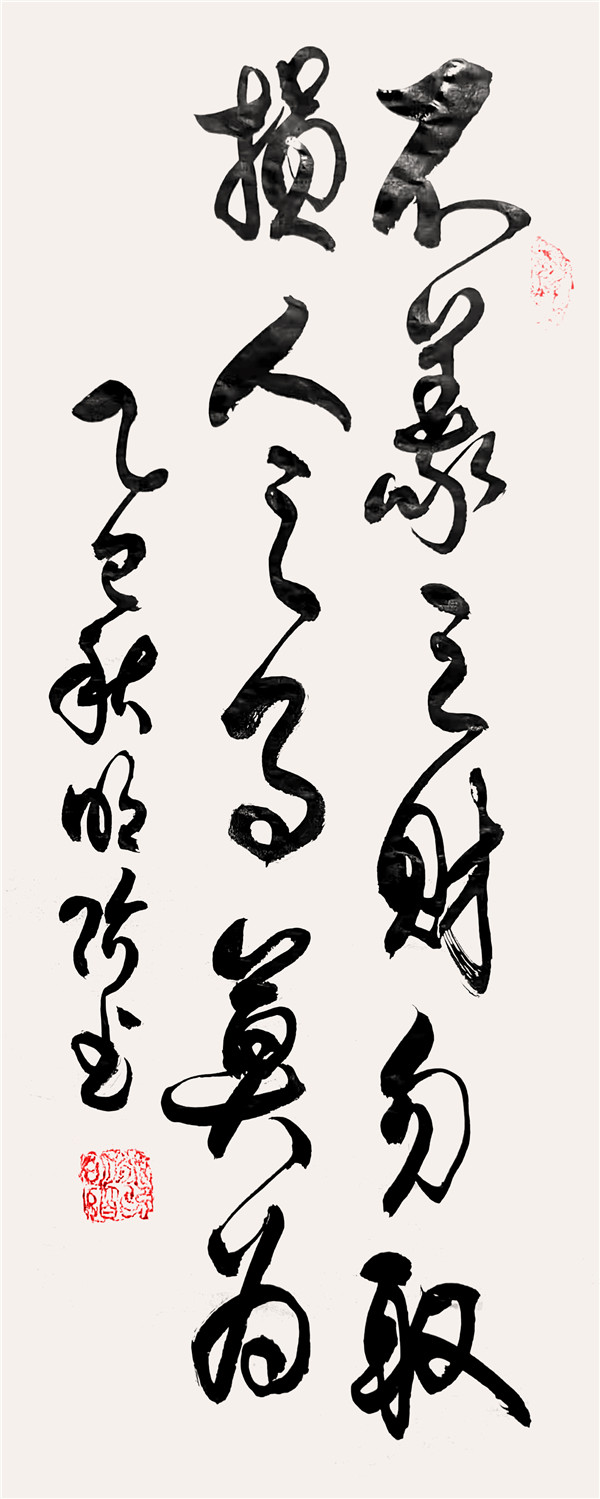
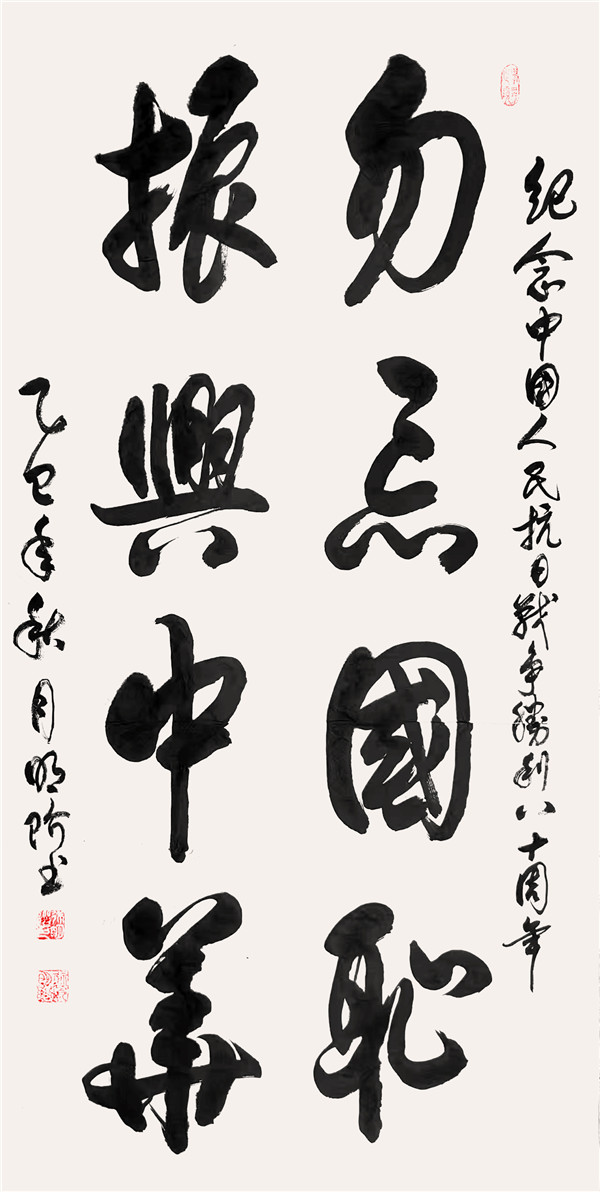
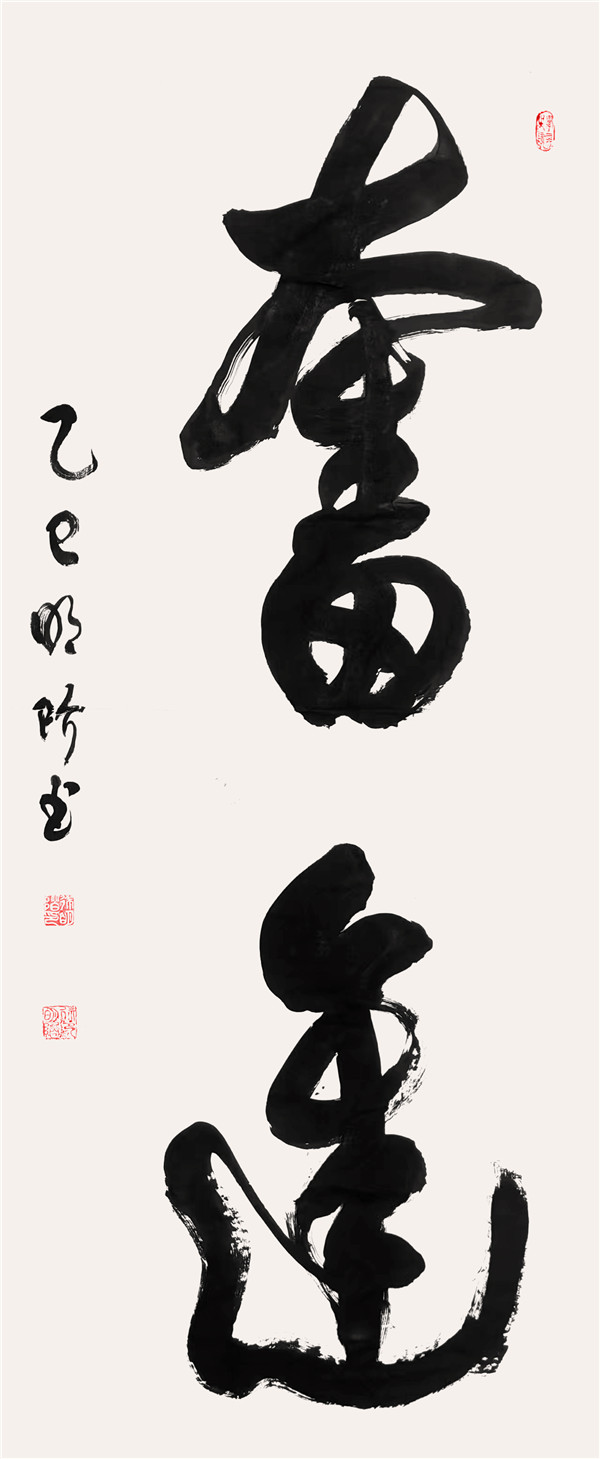
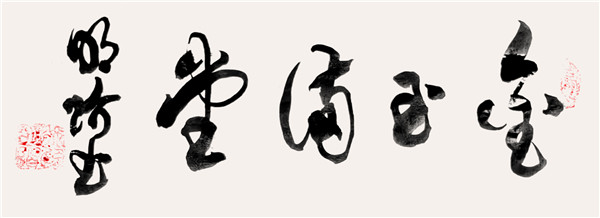
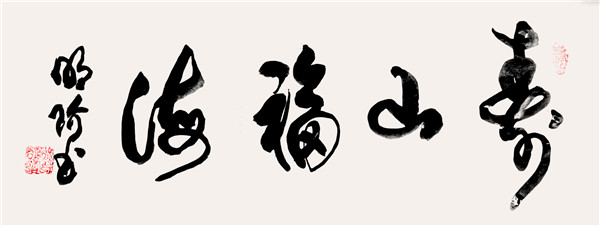
Xu Mingjie's calligraphy art is a profound dialogue between traditional brushwork and the spirit of the times. He used cursive script as a spear and regular script as a shield, outlining a contemporary calligrapher's persistent practice of "writing to convey messages" among the strokes of the brush.
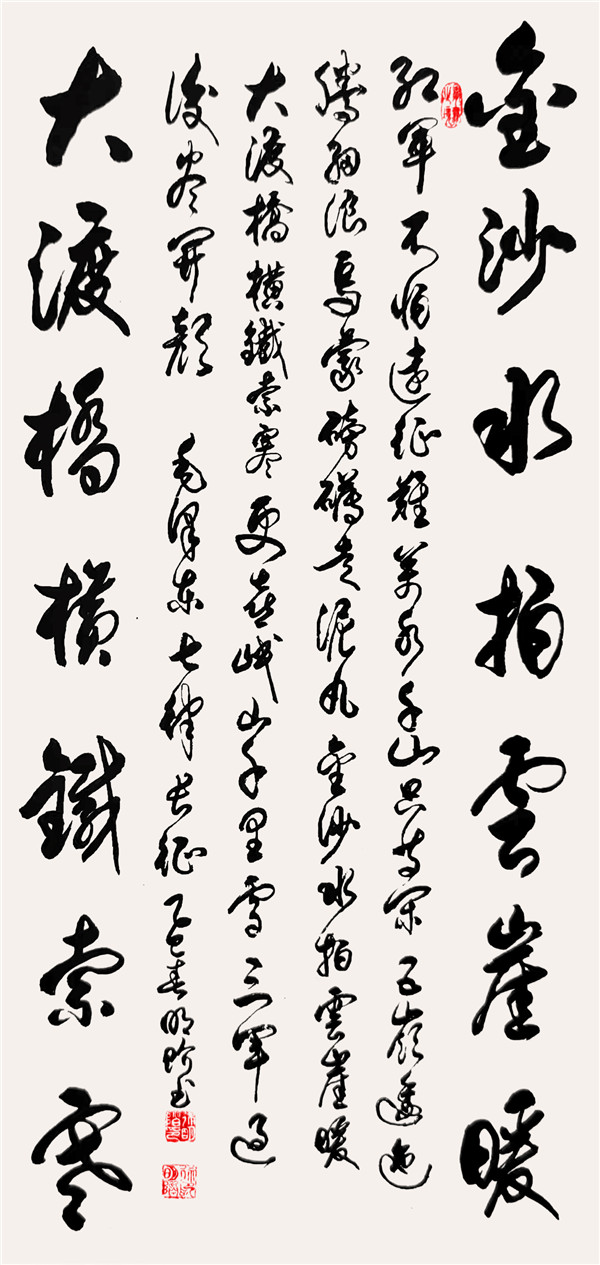
His cursive writing is deeply inspired by Zhang Huaiguan's "The Broken Book", which is described as "graceful as a silver hook, drifting like a startled phoenix". It is like the wild grass interpretation in "Fishing Alone in the Snow of the Cold River", where the strokes are continuous and the veins are connected, and the broken strokes are also "constantly flowing", transforming the solitary and lofty realm in Liu Zongyuan's poetry into ink colored ups and downs. This grasp of the "flowing and smooth" characteristic of cursive script is in line with the profound meaning of Sun Guoting's "Shupu" that "grass uses dots and paintings as emotions, and turns them into forms and qualities". Every turn becomes a footnote to emotions. In the writing of the poem "Long March", the cold iron cables across the Dadu Bridge are condensed into the resounding echoes of history with his vigorous lines.
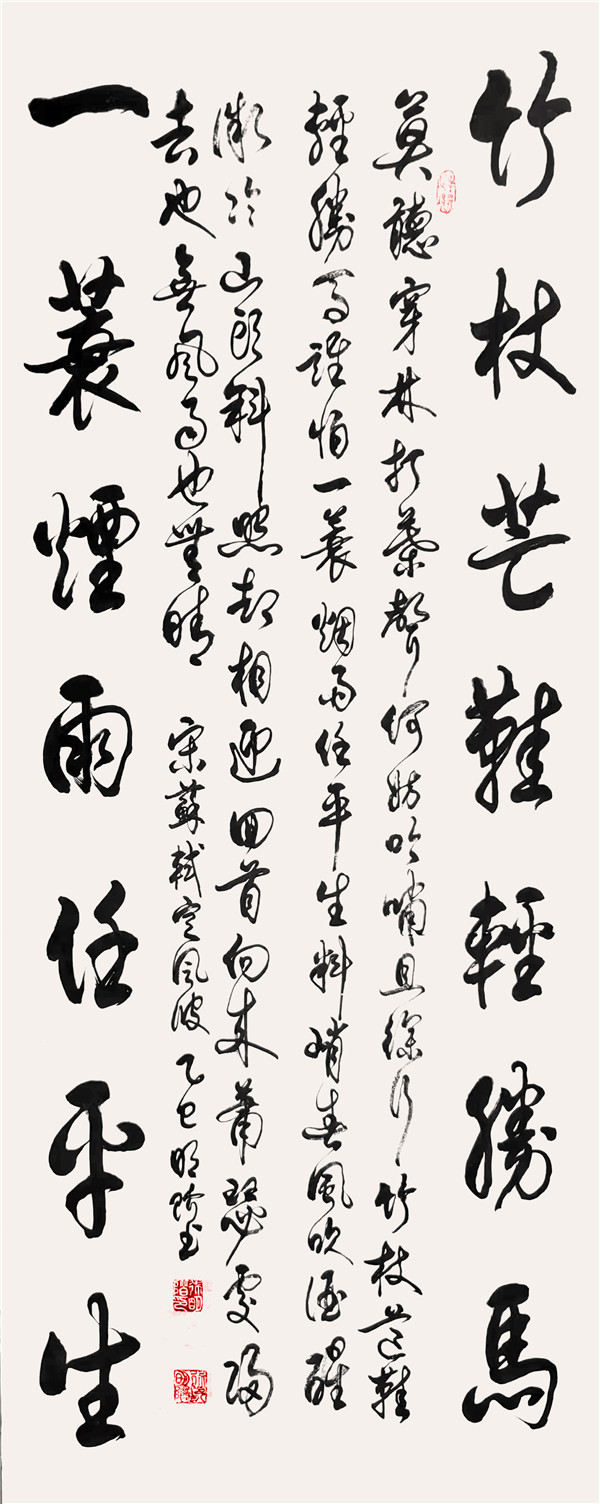
Xingkai works showcase a style of "stability with vitality", using regular script to establish bones, hiding sharp edges and strokes as if storing strength, and displaying the craftsmanship of "horizontal and vertical thinness" between strokes, casting the sentiment of family and country into the rock like posture of ink and brush; The poem 'Ding Feng Bo' also highlights the rhyme through its lines, with the spacing between characters and lines fluctuating with the meaning of the words. The rich and light ink colors are like the smoke and rain of life, perfectly interpreting the creative realm of 'the combination of literature and ink'.
Xu Mingjie is well versed in the principles of the Book of Rites, which state that "when learning about distribution, one must strive for stability; once one knows stability, one must seek danger; once one is able to avoid danger, one must return to stability". His works reflect his temperament in the Dharma and open up new horizons in tradition. He has proven through his artistic practice of winning more than 80 awards that the soul of calligraphy lies in using a thousand year old vocabulary of brush and ink to write the spiritual map of contemporary people. This is not only an aesthetic inheritance of the unity of bone strength and beauty, but also a sincere commitment of a calligrapher to "brush and ink should follow the times".
Copyright Notice: Original content on this website is welcome to be reposted. Please indicate the source when reposting, Global Art Network www.caanets.com; Some of the content posted on this website comes from the internet. If there is any infringement, please contact this website to delete it.
Daily recommendations
- [Exhibition]Sketching Public Education ...
- [News]Russian Avant garde Art Exhibition
- [News]Stone Tiger's Last Ten Yea...
Weekly hot topics
- 1Tianyu Ballad showcases the ...
- 2Wu Shanming Chinese Brush In...
- 3Three calligraphers go to Pi...
- 4Kunyun Danqing · Yongkun Op...
- 5The Art Exhibition of 'Circu...