张坤圣Zhang Kunsheng
2025-11-14 16:19:58 Art weekly
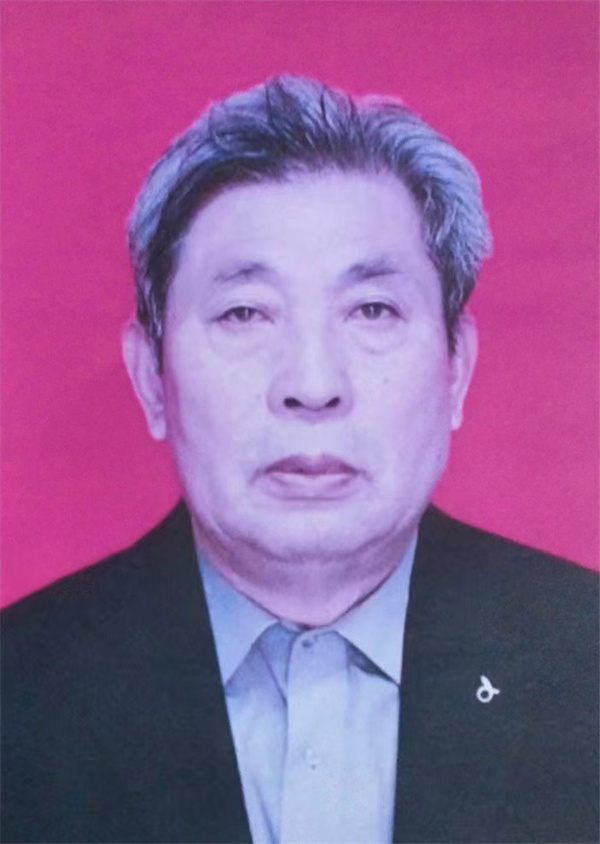
Zhang Kunsheng, male, born on February 5, 1945, college educated, member of the Communist Party of China, from Xiaoxian County, Anhui Province. I am currently a national top-level calligrapher, a member of the Chinese Calligraphers Association, a member of the Anhui Calligraphers Association, honorary chairman of the Chinese Calligraphers and Painters Association, honorary director of the China International Art Museum, creative researcher of the China Elderly Calligraphy and Painting Research Association, and researcher of the Global Hanmo Culture and Art Institute. He has successively been awarded the titles of "Meritorious Artist of the People's Republic of China", "Contemporary World Class Artist of China", "Contemporary World Top Art Master", "Outstanding Cultural Figure of UNESCO and Top Ten Outstanding Figures of the World in 2023" by UNESCO, "Top 50 Most Influential Calligraphers in China and 2019 National Artists of Virtue and Art" by the Chinese Calligraphers Association, and "Famous Calligraphers and Painters of Virtue and Art" by the Chinese Federation.
To see the spirit in the brush and ink, and to demonstrate the spirit in inheritance
——Impressions of Zhang Kunsheng's Calligraphy Art
Huang Jinliang (Editor in Chief of Chinese Painting and Calligraphy Guide)
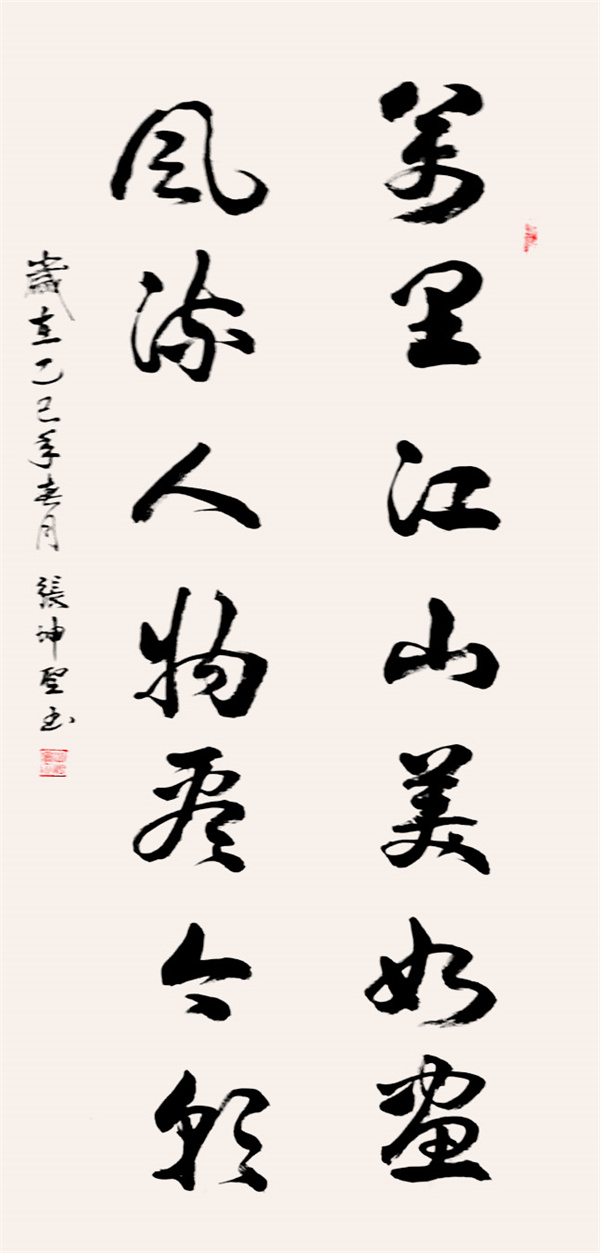
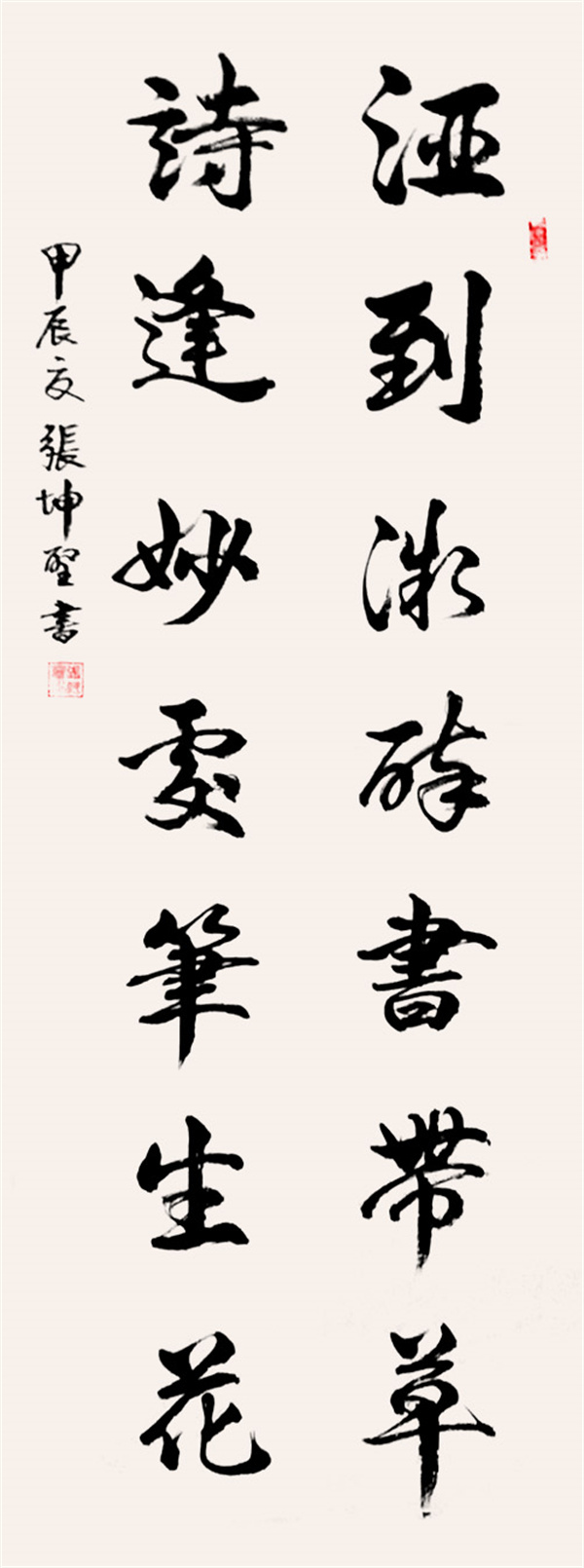
I have been in contact with Zhang Kunsheng for a long time. He is particularly skilled in cursive script and cursive script, deeply rooted in the fertile soil of traditional calligraphy and revealing a distinct personal artistic style. Just as Cai Yong's "Nine Directions" said, "Fu Shu originates from nature, nature is established, yin and yang arise; yin and yang arise, the situation emerges." His grasp of yin and yang and the situation in calligraphy fully demonstrates his skills and talents.
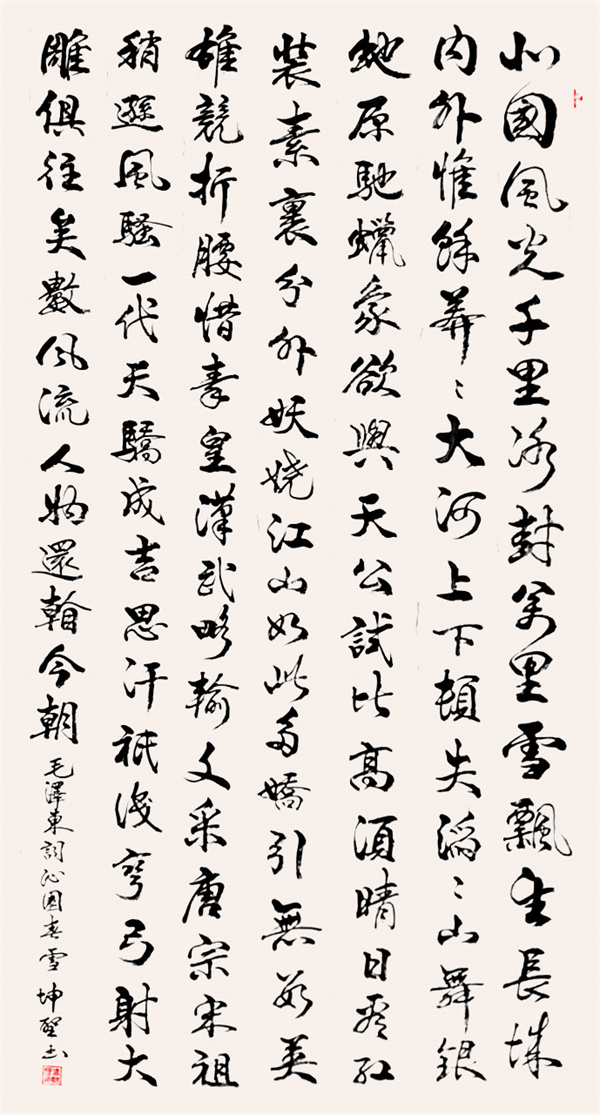
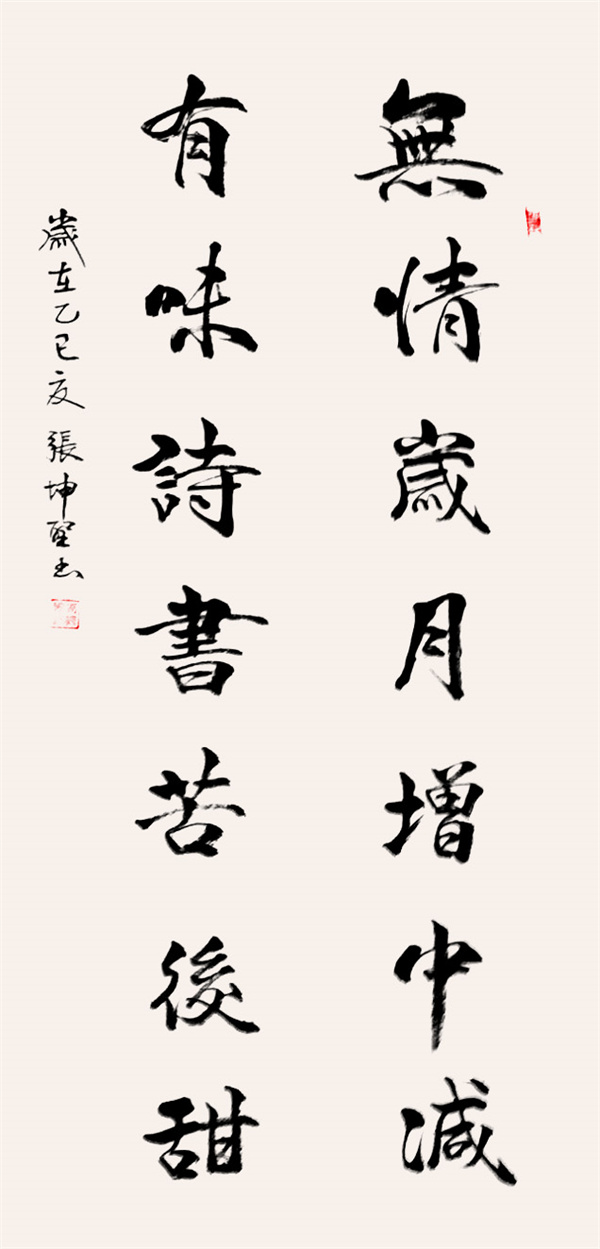
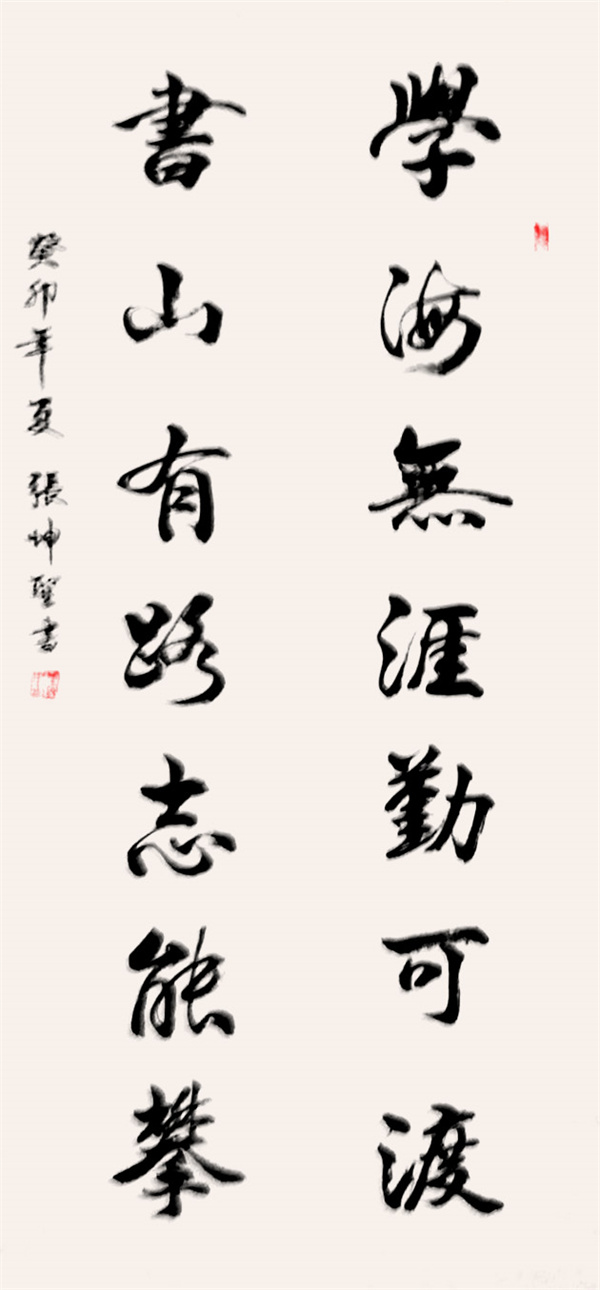
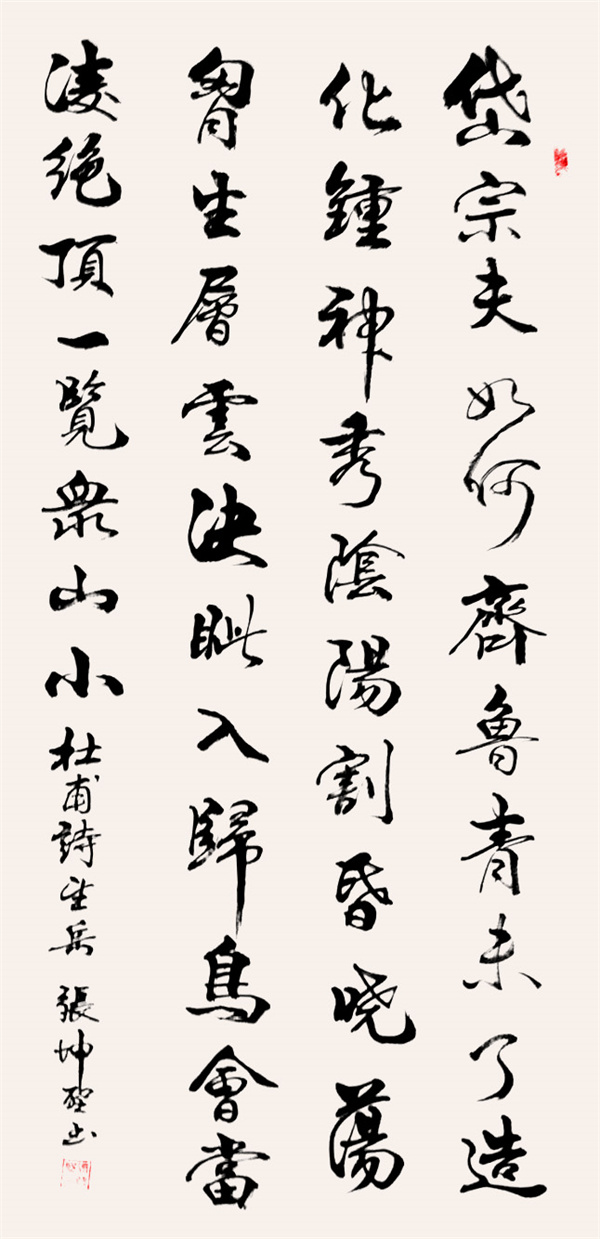
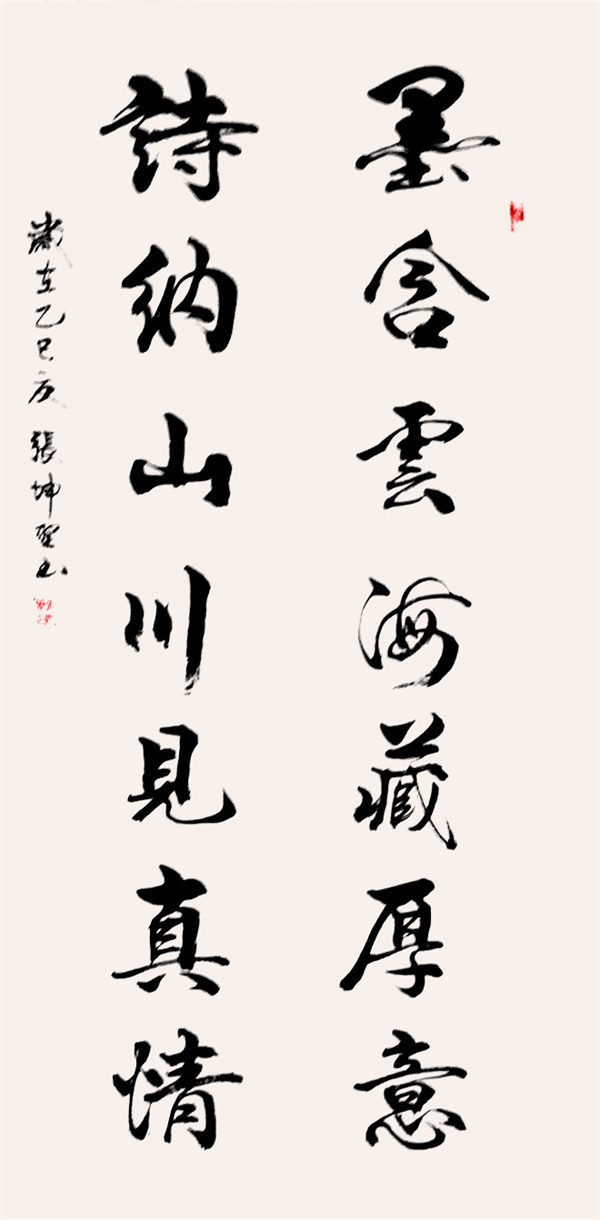
Observing his running script works, his brushwork is exquisite, his structure is broad, and his aura is coherent. The strokes have a rhythmic rhythm with ups and downs, and the strokes are suitable for hiding and revealing. The strokes are neat and precise, skillfully blending the agility of the "Two Kings" lineage with the magnificence of Yan Lugong. Each character is like 'the eagle strikes into the sky, the lion stands in the wilderness', with both a lively and majestic posture, achieving a harmony between vision and aura in the midst of harmony, reflecting his profound understanding and skilled application of traditional running script techniques.
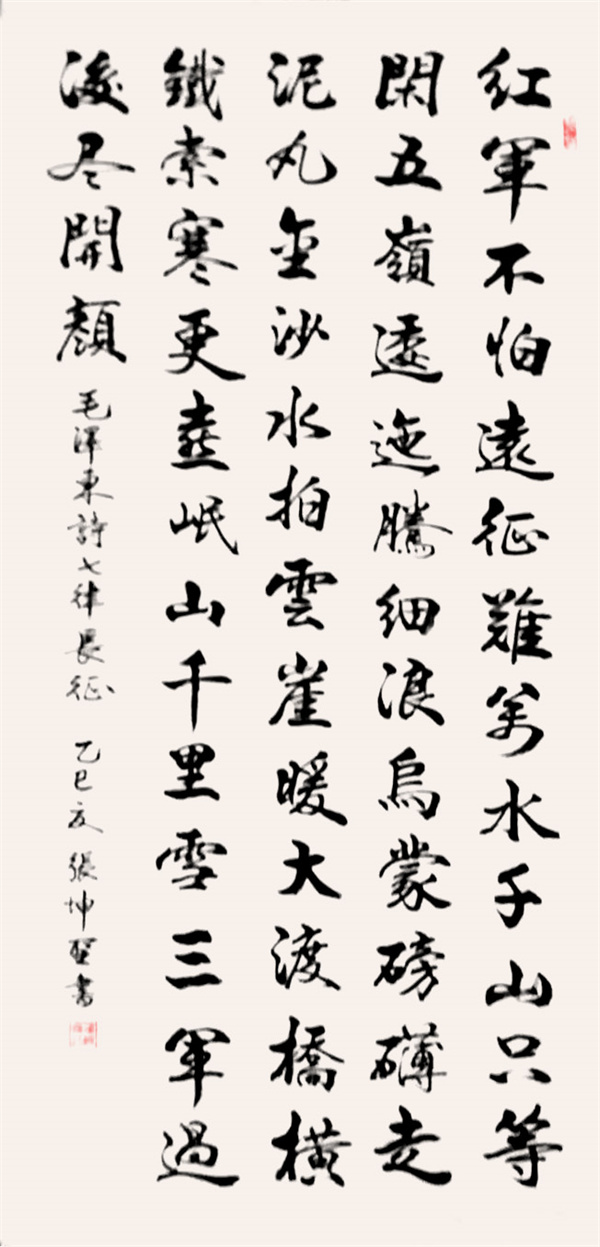
His cursive works add a touch of elegance and charm. When writing Mao Zedong's poem "The Long March," the brushstrokes are fluent, the lines are unrestrained but not out of control, and the threads between words and lines are naturally formed, reminiscent of the style of Zhang Xu and Huai Su, but also containing rational restraint in the wild. As Sun Guoting emphasized in his "Shupu," "Grass cannot be both true and true, it is almost dedicated; true cannot be connected to grass, it is not Hanzha." He integrated the bone of true calligraphy into cursive script, making the works wild but not wild, and unrestrained but not wild.
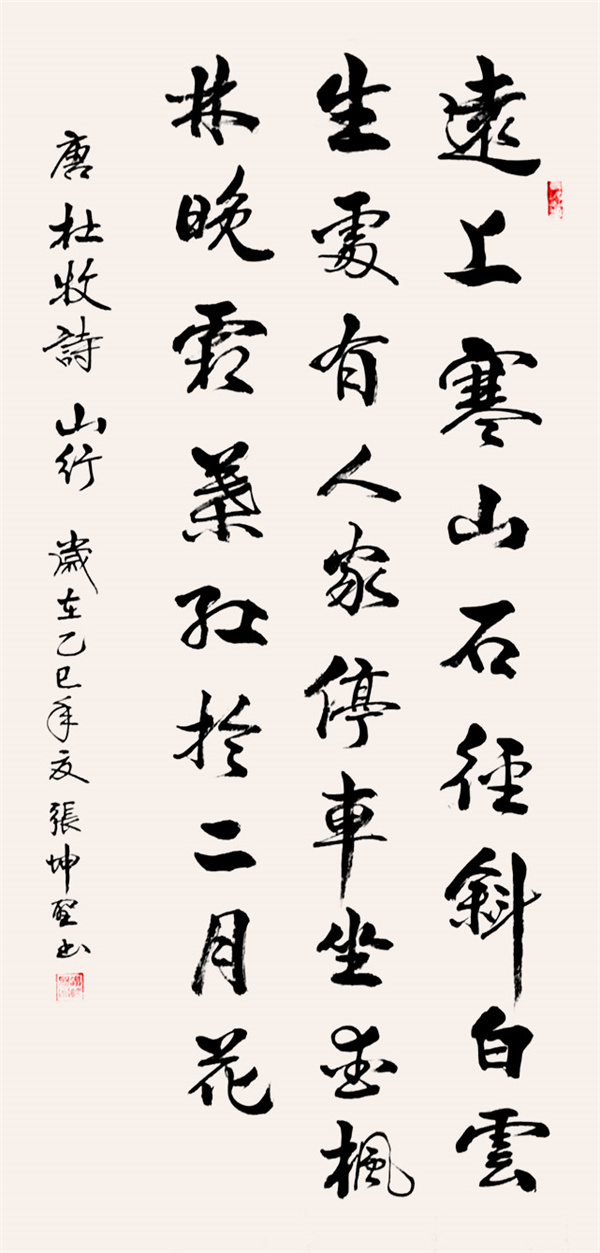
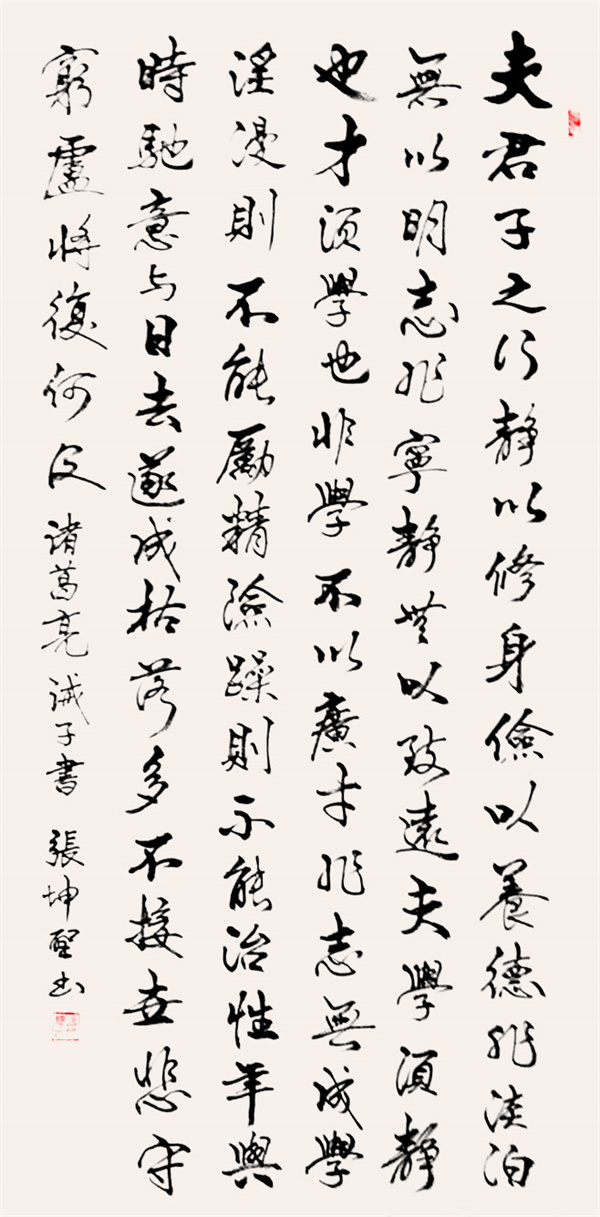
In the writing of classic poetry and prose, Zhang Kunsheng further demonstrates the integration of his cultural heritage and artistic sentiment. When writing Du Mu's "Journey to the Mountains", the poetic and visual qualities flowing between the brush and ink make calligraphy another form of "poetry and painting of the same origin"; When writing Zhuge Liang's "Book of Admonitions to the Son", his steady brushwork and strict structure complemented the principles of self-cultivation and character cultivation contained in the sentences, achieving the artistic realm of "books as paintings of the heart, words as the voice of the heart".
Zhang Kunsheng's calligraphy is a brave climb on this traditional high mountain. He builds his own artistic world in the black and white world of brush and ink, based on a solid foundation in traditional arts and personal temperament and thinking. His works not only showcase the essence of techniques, but also appreciate the beauty of charm and the richness of culture. It is a fine art masterpiece worth savoring in the contemporary literary world, innovating through inheritance and revealing its true essence in brushwork.

Copyright Notice: Original content on this website is welcome to be reposted. Please indicate the source when reposting, Global Art Network www.caanets.com; Some of the content posted on this website comes from the internet. If there is any infringement, please contact this website to delete it.
Daily recommendations
- [Exhibition]Sketching Public Education ...
- [News]Russian Avant garde Art Exhibition
- [News]Stone Tiger's Last Ten Yea...
Weekly hot topics
- 1Tianyu Ballad showcases the ...
- 2Wu Shanming Chinese Brush In...
- 3Three calligraphers go to Pi...
- 4Kunyun Danqing · Yongkun Op...
- 5The Art Exhibition of 'Circu...