孔庆国Kong Qingguo
2025-11-10 16:57:31
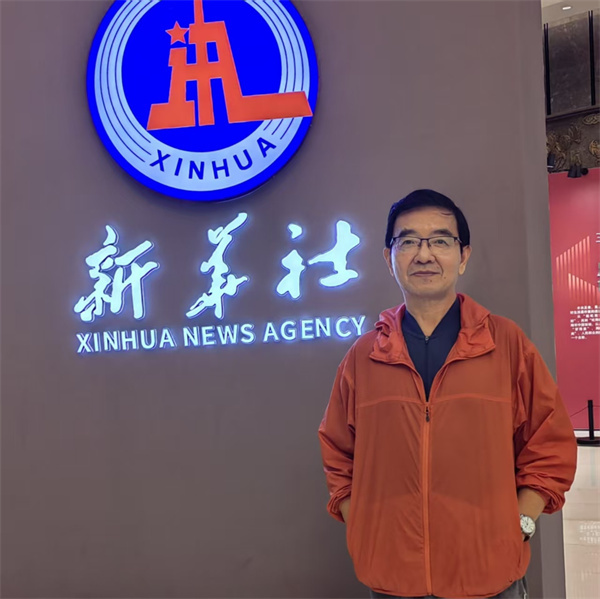
Kong Qingguo, male, with the courtesy name Wangyuan, is the 73rd generation grandson of Confucius. He was born in September 1959 in Zoucheng, Shandong, with a college degree. He is a member of the Communist Party of China, a national first-class calligrapher and mage, a member of the Chinese Couplet Association, a member of the Chinese Hard Pen Calligraphy Association, an academician of the Chinese Volunteer Calligraphy and Painting Academy, a member of the Chinese Calligraphers and Painters Association, a director of the Chinese Elderly Calligraphy and Painting Society, a researcher at the Global Hanmo Culture and Art Academy, a member of the Beijing Zhongyi Yanjing Calligraphy and Painting Academy, a senior calligrapher and mage at the Calligraphy Court of the Chinese Academy of Painting, vice president of the Calligraphy Academy of the Global Hanmo Art Academy, a member of the.
In October 2019, recommended by the Standing Committee of the Chinese Academy of Chinese Painting, the Chinese Academy of Chinese Painting decided to establish a personal calligraphy art studio named after Kong Qingguo himself, and awarded a plaque and authorization certificate. In recent years, he has participated in several national calligraphy competitions and won dozens of awards, while also receiving praise and recognition from experts. In August 2021, a personal calligraphy exhibition titled "Chinese Contemporary Calligraphers and Painters Online Project" was held at the Global Network Art Museum, with over 20000 views. Some of the works have been included in the "National Poetry, Calligraphy and Painting Masterpieces Collection", "The Second National Middle aged and Elderly Calligraphy and Painting Competition Award Collection", "Yanhuang Poetry, Calligraphy and Painting Printing Art Masterpieces Collection", "Love Me China Golden Cup National Calligraphy and Painting Exhibition Masterpieces Collection", "The Third National Middle aged and Elderly Calligraphy and Painting Creation Exchange Seminar Award Collection", "Jiangshan Song National Poetry, Calligraphy and Painting Printing Masterpieces Collection", "Hanmo Danqing Chinese Dream -2016 Enterprise and Institution Employee Calligraphy and Painting Competition Masterpieces Collection", and "Commemorating the 40th Anniversary of Chairman Mao Zedong's Death Calligraphy and Painting Masterpieces Collection". Some works have also been collected by professional institutions and the public, such as the Pingbei Anti Japanese War Memorial Hall, the Three Gorges Art Museum of the Chinese Academy of Traditional Chinese Painting, the Chinese Painting and Calligraphy Development Research Association, and the Beijing Military Heavenly Calligraphy and Painting Academy. In recent years, it has been awarded titles such as National Top 100 Calligraphers and Painters, People's Artist of the Republic, Top 100 Chinese Calligraphers and Painters, Chinese Red Artist, Excellent Artist of Chinese Dream in Calligraphy and Painting, Outstanding Contemporary Chinese Calligraphers and Painters, National Excellent Middle aged and Elderly Calligraphers and Painters, Top 100 Chinese Calligraphers and Painters, and Leading Figure of New Era Calligraphy and Painting Brands by national social art organizations.
The strokes of the pen reveal the dragon and snake, revealing the wind and bones
——A Glimpse into Kong Qingguo's Calligraphy Art
Huang Jinliang (Editor in Chief of Chinese Painting and Calligraphy Guide)
In the works of contemporary calligrapher Kong Qingguo, we can see both reverence for traditional laws and feel the vivid expression of his personality. He is like an artist who is well versed in the "wonderful way of writing, where expression comes first and form and quality come second" (Wang Sengqian's "Praise of Pen Intent"), building a bridge between tradition and modernity through his brushwork.
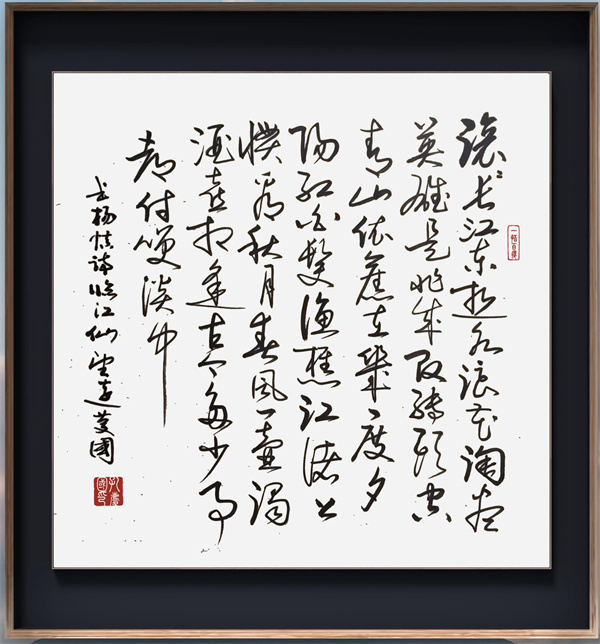
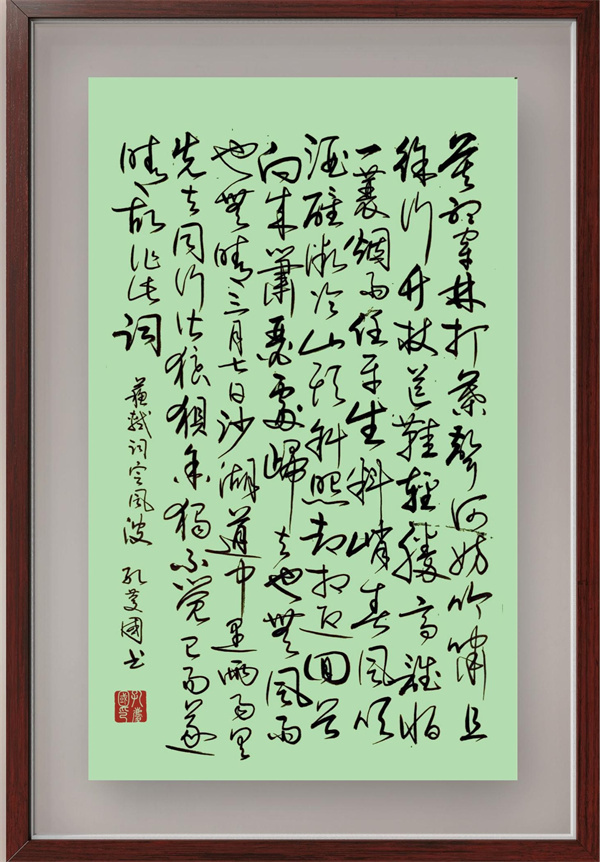
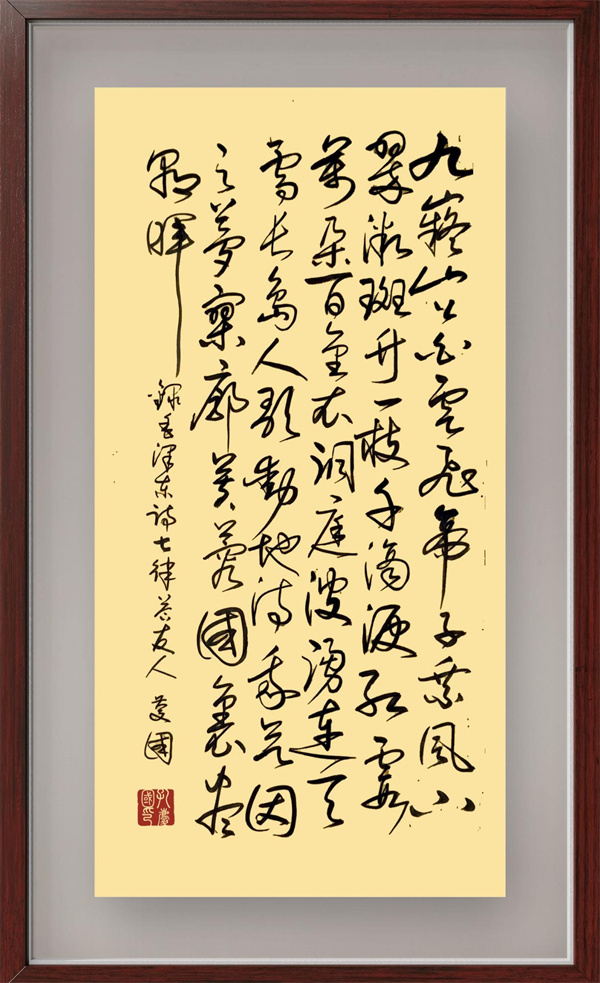
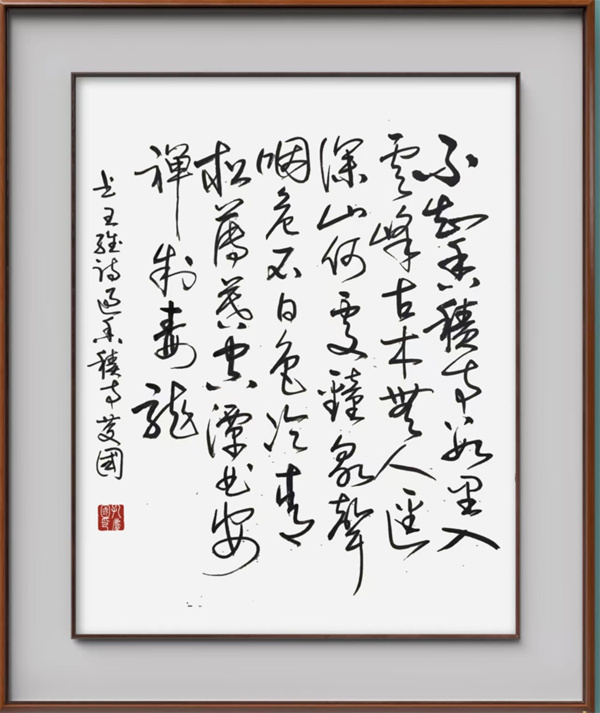
His cursive works, such as "Jiang Jin Jiu" and "Lin Jiang Xian: Rolling Yangtze River Flows East", have a continuous and winding brushwork, with undulating lines, fully embodying the beauty of "observing its power without losing, showcasing its posture without exaggeration, and the handwriting flowing like water and clouds". His cursive script draws inspiration from the wild grass spirit of Zhang Xu and Huai Su, while also incorporating his own understanding of poetry, making every cursive work a carrier of emotions. In the writing of "Ding Feng Bo: Don't Listen to the Sound of Passing through the Forest and Beating Leaves", the variations in the thickness of lines and the shades of ink, dry and wet, are just like the broad mindedness of Su Shi's poem "The bamboo cane and shoes are lighter than the horse", integrating the rhythm of calligraphy with the artistic conception of words, showing the artistic realm of "emotion and form, taking the meaning of charm; the sun and shade are melancholy, based on the heart of heaven and earth" (Sun Guoting's "Book Manual"), allowing viewers to feel the poet's mind and the calligrapher's temperament wherever the brush and ink move.
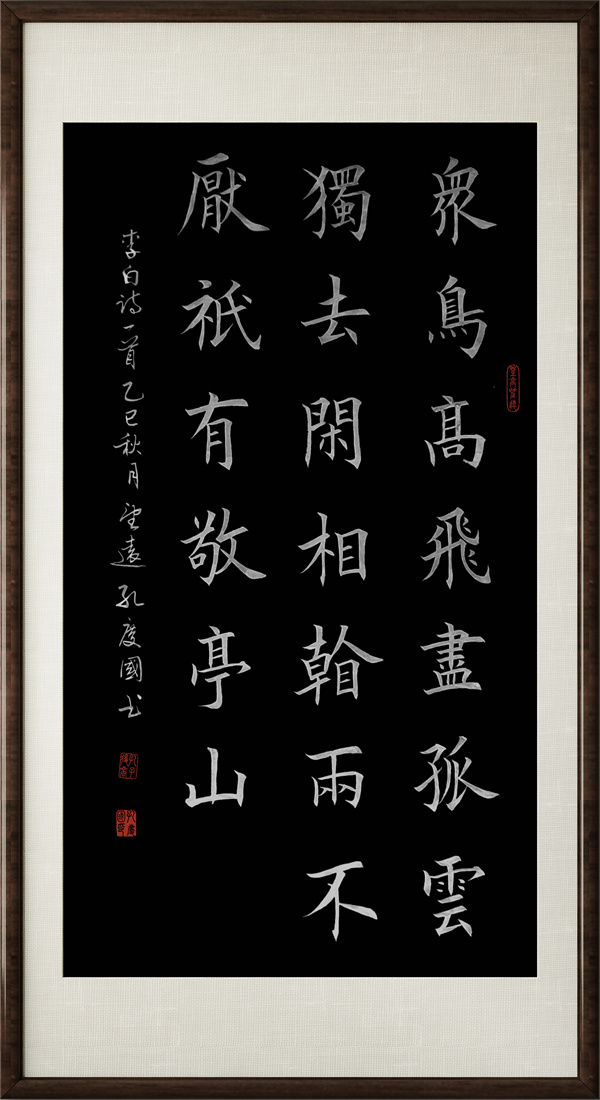
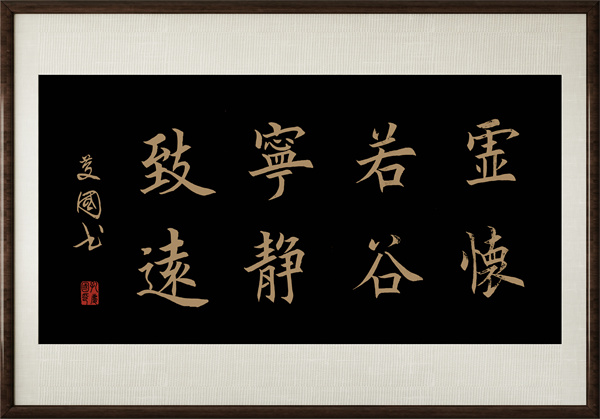
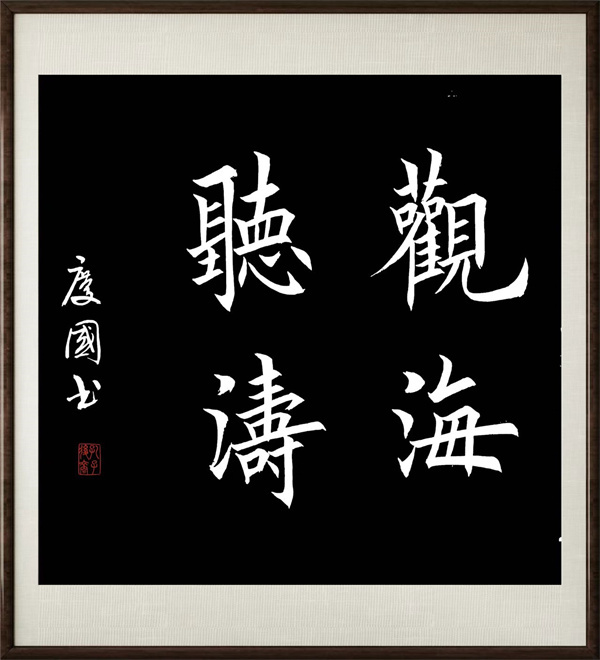
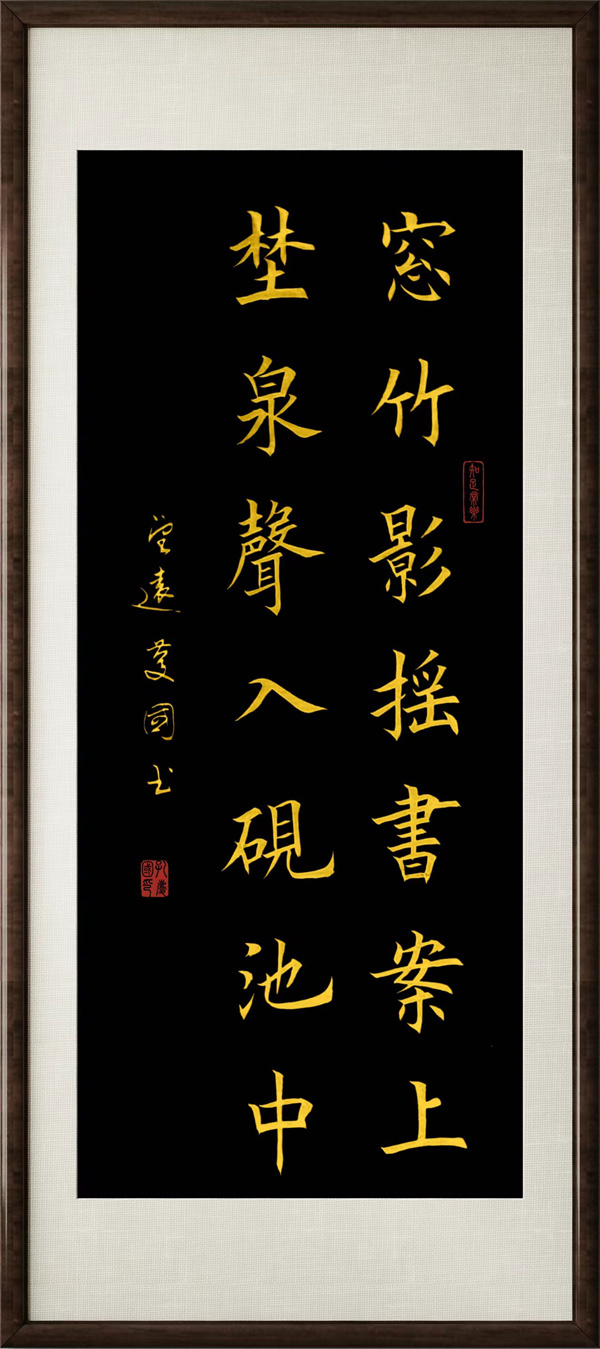
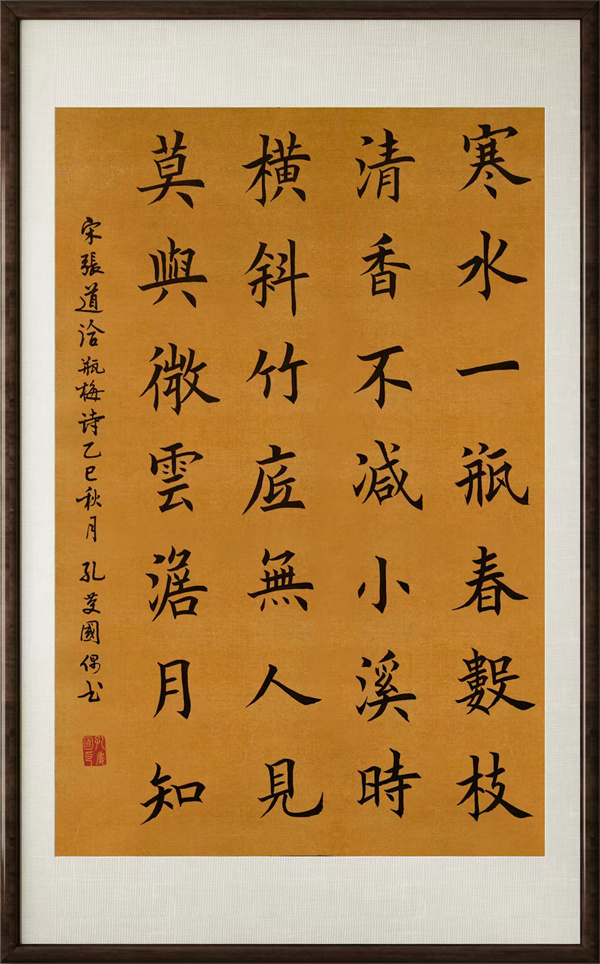
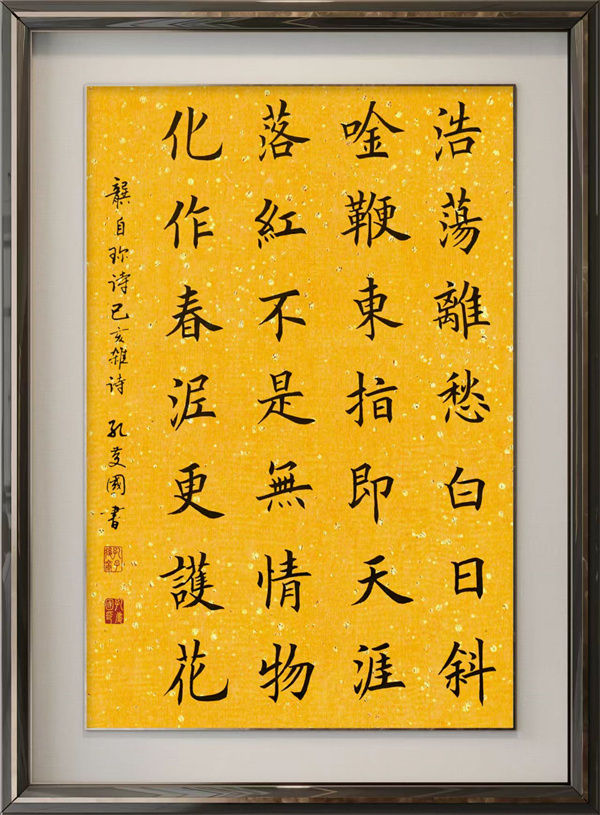
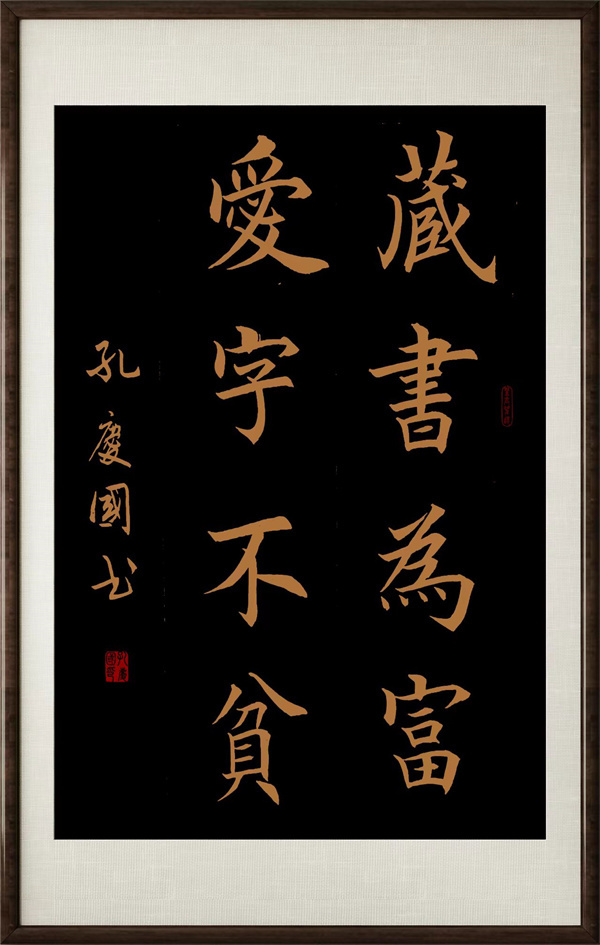
Kong Qingguo's regular script follows the style of Ou Yan, but is not outdated. The structure is dignified and neat, with precise and powerful strokes. The dots are like falling rocks on a peak, and the horizontal lines are like a thousand mile formation of clouds, fully demonstrating the rigor of regular script. His regular script has both the dignified atmosphere of "being able to balance and strive for beauty and goodness" (Xiang Mu's "Calligraphy Elegant Words") and the dynamic posture, implying the flow of stroke meaning between regular strokes, adding an "elegant" charm to regular script on the basis of "craftsmanship", reflecting his exquisite grasp of the balance between "law and meaning" in traditional regular script.
From the unrestrained and unrestrained style of cursive script to the elegant and square style of regular script, Kong Qingguo, on the path of calligraphy art, based on tradition and using temperament as ink, interprets the thousand year cultural context of Chinese calligraphy's "expressing emotions and forming sadness and music" in every inch of brush and ink. His works are a vivid interpretation of the saying "The calligrapher is scattered, and if you want to write, you should first scatter your embrace" (Cai Yong's "Pen Theory"). They not only carry the aesthetic genes of classical calligraphy, but also demonstrate the artistic thinking of contemporary calligraphers. In the contemporary calligraphy world, he can be regarded as a powerful calligrapher who can "open up new horizons" in the "law of antiquity". The artistic value of his works is waiting for more people to appreciate and explore.



Copyright Notice: Original content on this website is welcome to be reposted. Please indicate the source when reposting, Global Art Network www.caanets.com; Some of the content posted on this website comes from the internet. If there is any infringement, please contact this website to delete it.
Daily recommendations
- [Exhibition]Sketching Public Education ...
- [News]Russian Avant garde Art Exhibition
- [News]Stone Tiger's Last Ten Yea...
Weekly hot topics
- 1Tianyu Ballad showcases the ...
- 2Wu Shanming Chinese Brush In...
- 3Three calligraphers go to Pi...
- 4Kunyun Danqing · Yongkun Op...
- 5The Art Exhibition of 'Circu...