Viewing local realism from the "Yellow River Watercolor Biennial"
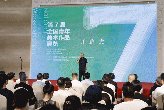
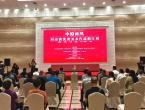
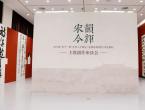
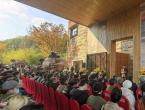
In the realm of contemporary art, the value of an exhibition often extends beyond merely displaying works; it lies more in whether it can tear open the cracks of industry inertia and forge a profound connection between art and life. The "Great River Flows Endlessly: Yellow River Watercolor Biennial" (see pages 14 and 15 for artwork images), which opened in the late autumn of 2025 at the Stone City Museum in Wubu, Shaanxi Province, made a groundbreaking move by "inviting the depicted subjects into the exhibition hall," providing a highly enlightening "breaking through the walls" practice for art creation that is deeply trapped in symbolization and elitism.
For a long time, the closed nature of art within the "ivory tower" has created an invisible barrier between the creator and the depicted. Painters, with their brushes in hand, often adopt an "observer" stance, looking down upon life, simplifying the local into stereotypical symbols such as cave dwellings and loess, and framing the people as impersonal creative materials. When visitors enter art museums, they are mostly confronted with displays of techniques that are divorced from the context of life, making it difficult to generate deep empathy with the works. The significance of this biennial lies in its breaking down this one-way mode of creation and appreciation, allowing local realism to leap beyond concepts and into practical application, and truly returning art to its essence of "serving the people".
The core of local realism has never been a superficial replication of local landscapes, but rather a deep empathy for the texture of life and the state of being. Currently, many creations with local themes have fallen into the misconception of "collecting style creation": painters briefly enter the countryside, capture several scenes with their cameras, and pile up some elements with their brushes, then boast of being "rooted in life," ignoring the real stories and emotions that grow on the land. Such creation essentially alienates the "depicted" as a tool for artistic expression, rather than viewing them as the core object of creation. The local realism practiced in the "Great River Flows·Yellow River Watercolor Biennial" does exactly the opposite. It no longer places art above life, but rather makes art a "mirror" of life. When watercolor brushstrokes reflect the real life scenes along the Yellow River, and when those who coexist with the Yellow River stand in front of the paintings, they can recognize their daily lives, their emotions, and their dignity from the colors and lines, art has completed its transformation from "specimenization" to "vivification." This transformation is a powerful correction of the tendency in contemporary art creation to "emphasize technique over humanity": true local creation should not be a "monologue" of the painter, but rather a "dialogue" involving both the painter and the depicted. Only in this way can the work bear the weight of the land and the warmth of the people.
When the creative concept of local realism takes root, the mutual nourishment between art and the local becomes fertile soil for growth. This nourishment is never an empty slogan, but requires concrete creative practice and cultural action to be realized. Currently, some art exhibitions either indulge in the abstruse concepts, turning art into an "intellectual game" that only a few can interpret, or pursue the magnificence of form, turning the exhibition into a "performance stage" detached from life. Both tendencies sever the connection between art and the local, and between art and the people. However, this Yellow River Watercolor Biennial breaks free from this limitation through its creative and curatorial approach of "artists bringing their own traffic to empower the countryside". It does not deliberately emphasize the profoundness of techniques, nor does it blindly pursue trendy forms. Instead, it takes "returning art to the people" as its core goal - allowing art to step out of the walls of art museums and into the daily life of the local; allowing the "subjects" in artistic creation to move from the "background" to the "foreground", becoming participants and beneficiaries of art.
This value of breaking barriers and nourishing in both directions is well reflected on two levels: on the one hand, artists take root in their local communities, drawing creative inspiration from people's lives, giving their works authentic vitality; on the other hand, local communities also gain new paths for cultural dissemination and new dimensions of self-identity through the intervention of art. When local communities can see their own value in art, and when people can feel their own dignity in works, art is no longer an isolated aesthetic object, but becomes an important force to activate local culture and empower rural development.
"A truly good artist must take root in the soil; the core of true mountains and rivers lies in the people." This sentence precisely reveals the fundamental direction of contemporary art creation. For a long time, "mountains and rivers" have been narrowed down to symbols of grand narratives in many works - painting the Yellow River only to pursue the visual impact of its grandeur and majesty; painting mountains and rivers only to highlight their magnificent and precipitous forms. However, the reason why mountains and rivers can be so moving lies precisely in the fact that "people" always reside within them. People are the soul of mountains and rivers, the masters of the land. Mountains and rivers without people are merely natural landscapes lacking warmth; creations divorced from people are ultimately just a pile of techniques without soul. The valuable aspect of this "Great River Flows·Yellow River Watercolor Biennial" lies in its vivid interpretation of the concept of "art for the people" and its reaffirmation of the central position of "people" in artistic creation: allowing the mountains and rivers in the works to become the backdrop of people's lives, and letting the characters in the paintings become concrete carriers of the spirit of the mountains and rivers. This creative and curatorial direction not only provides a clear path for correcting the deviation of contemporary art towards "emphasizing landscape over humanity", but also points out the direction for artists to move forward - truly good works do not replicate the superficial forms of mountains and rivers with a paintbrush, but capture the spiritual pulse of people with emotion; truly good artists do not hide in their studios and work behind closed doors, but enter the local area, get close to the people, listen to their stories, and pass on their strength, allowing art to truly become a spiritual bond connecting mountains and rivers with people.
It should be said that the significance of the "Great River Flows·Yellow River Watercolor Biennial" has long surpassed the mere scope of an exhibition. It is more like a mirror, reflecting both the existing issues in contemporary art creation and illuminating the practical path for art to return to life and give back to the people. For the art world, this exhibition offers particularly profound insights: the value of art lies not in the pursuit of profound forms or niche audiences, but in its ability to connect with life and touch people's hearts; the development of local realism does not depend on how many local symbols it can replicate, but on whether it can truly empathize with the people and coexist with the land.
Future artistic creation requires more such "breaking the wall" practices - breaking down the closed barriers of the ivory tower, breaking the symbolic creation inertia, breaking the elitist aesthetic bias, and allowing art to truly take root in the soil and serve the people. Only in this way can art find its own position in the development of the times and create good works that are worthy of the land, the people, and the era; only in this way can art truly achieve mutual nourishment with the local soil and become an important link connecting art and the public, activating the vitality of culture.
Copyright Notice: Original content on this website is welcome to be reposted. Please indicate the source when reposting, Global Art Network www.caanets.com; Some of the content posted on this website comes from the internet. If there is any infringement, please contact this website to delete it.